AI Smart Glasses for Video Recording: Honest Review

A pair of shiny black frames sitting on my nose while I narrated my morning commute to an AI felt absurd until, about a week in, it stopped feeling absurd entirely.
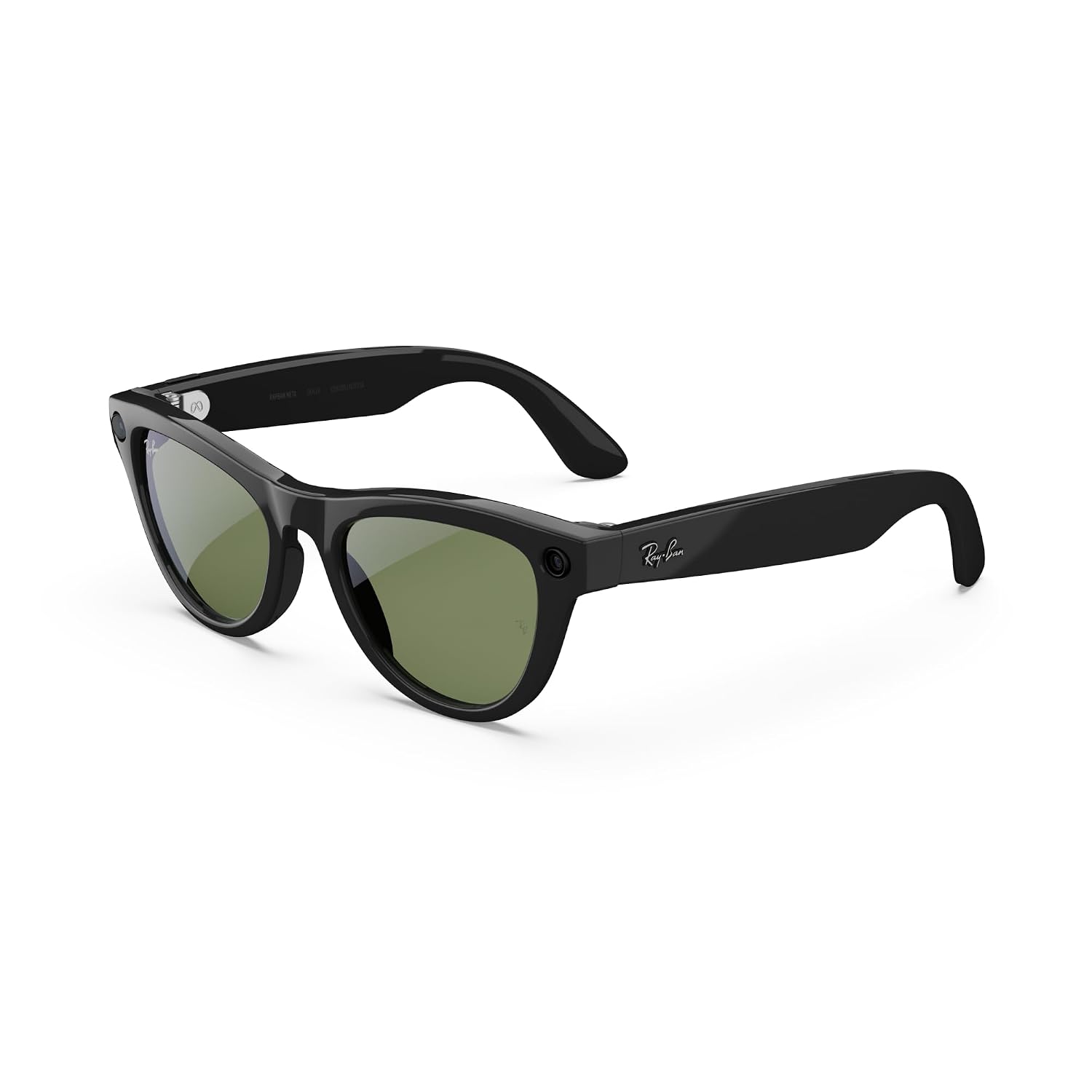
The first thing you notice is how normal they look. I slid the Ray-Ban Meta Skyler Smart Glasses in Shiny Black onto my face on a Tuesday morning, grabbed my coffee, and walked out the door. My neighbor waved. A barista asked if I wanted oat milk. Nobody said a word about the tiny camera embedded at the bridge, or the speakers hovering just in front of my ears, or the fact that I was, technically, wearing a computer on my face. That invisibility is either the cleverest design decision in consumer wearables right now, or the most quietly unsettling one. I’m still deciding which.

The First Time I Used It
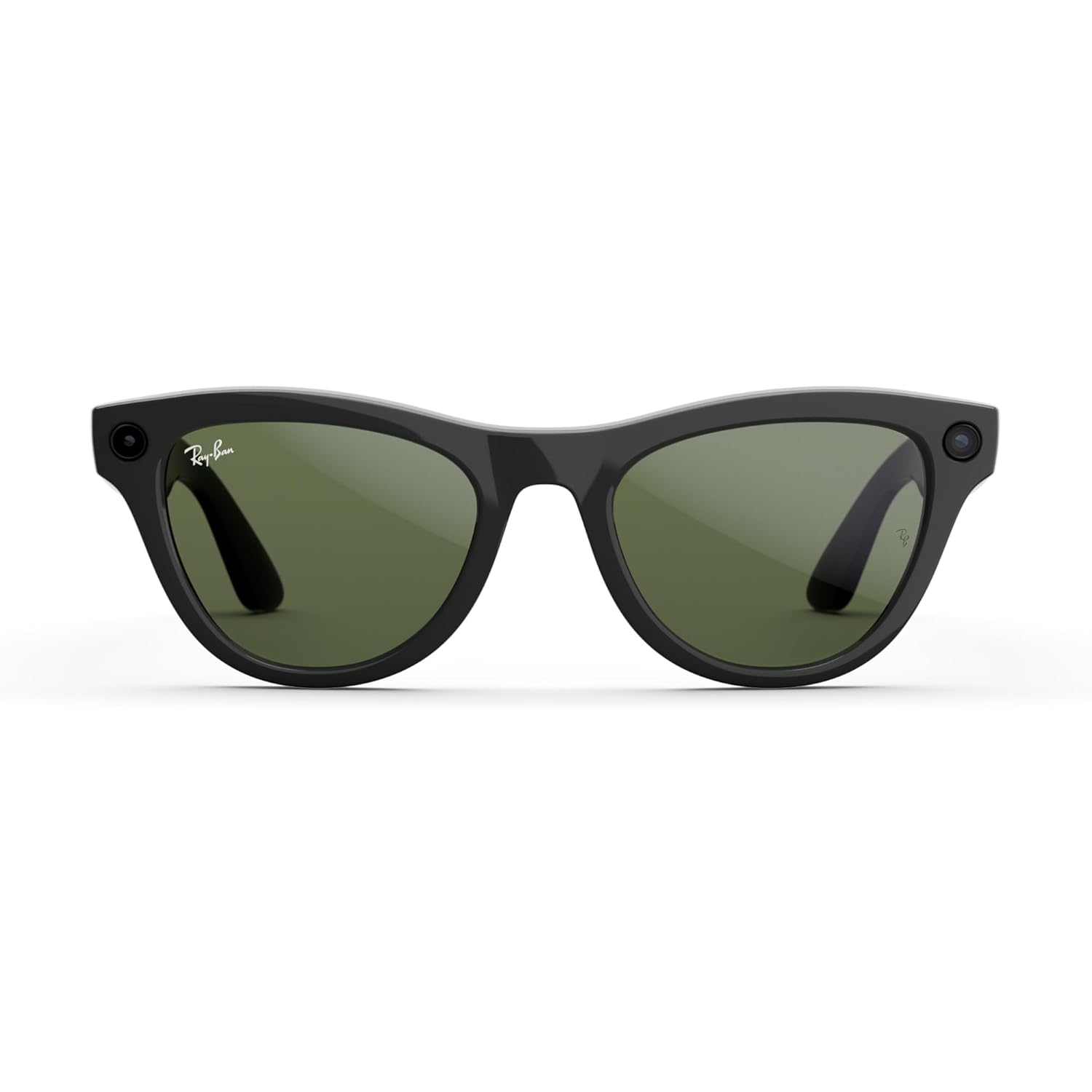
I’d been down a rabbit hole of phone and mobile tech accessories for a few weeks when the Ray-Ban Meta listing stopped my scroll cold. It wasn’t the spec sheet. It was the form factor. Smart glasses have spent years looking like props from a 2009 tech expo. These looked like something you’d actually wear to dinner. The green lenses on the Skyler frame have this warm, slightly amber cast indoors that softens into something genuinely flattering in daylight.
I ordered them mostly out of journalistic curiosity. I expected to return them within a week. I didn’t.
How It Actually Performs
The 12MP ultra-wide camera captures first-person footage with a field of view wide enough to feel immersive without the fish-eye distortion that ruins action cam clips. In good light, video is crisp and surprisingly color-accurate. In low light, the sensor struggles in ways you’d expect from any small-aperture fixed lens, so don’t plan on replacing your phone camera for evening shots. The open-ear speaker system delivers audio that lands directly in front of your ear canals without occluding them, which means you can hold a phone conversation, listen to a podcast, or ask Meta AI a question while still hearing a car horn, a barking dog, or the flight attendant telling you to put your tray table up.
“The best smart glasses aren’t the ones that do the most. They’re the ones you forget you’re wearing.”
Battery life tops out at around eight hours in mixed-use mode, which in practice means music streaming plus a handful of AI queries plus two or three short video clips across a full workday. That held up across my testing, though heavy video recording will chew through that faster than you’d think. Wearable tech coverage at The Verge has noted that AI glasses as a category are still ironing out the thermal management and battery math, and that tension shows up here too. The frames run slightly warm during extended recording sessions. Not uncomfortable, just noticeable.


How I Actually Used It
Setup 1: Tuesday Standup, Remote Work Mode
My work from home setup is a converted corner of a one-bedroom apartment with two monitors, a mechanical keyboard, and more cable management than is probably healthy. The Ray-Ban Meta slid into this environment as a kind of ambient co-pilot. I’d wear them through my morning standup, use the tap control on the right arm to capture a quick video note when something interesting came up on screen, and let the open-ear audio handle a Spotify playlist without me reaching for my over-ear headphones. The thing about the open-ear design in a work from home setup is that you stay in the room acoustically. You hear your partner’s voice through a wall. You catch the delivery buzzer. You don’t disappear into audio isolation the way you do with noise-canceling cans, and sometimes that’s exactly right.
Setup 2: Saturday Afternoon, Hands-Free Street Photography
I spent a Saturday in a neighborhood I’d never walked before, wearing the glasses and recording short clips with a single tap on the frame. No phone out. No viewfinder. No obvious camera pointed at anything. The footage I got back was documentary in quality, slightly raw, and shot from actual eye level in a way that phone footage almost never is. There’s something disarming about first-person video captured without the performance anxiety of holding a device. A few clips from that afternoon are still sitting in my camera roll as wallpapers.
Setup 3: Evening Run, AI On Call
This is where the Bluetooth connectivity earned its keep. I paired the glasses to my phone, started a run playlist, and somewhere around mile two I asked Meta AI out loud to remind me to book a dinner reservation. It did. I didn’t break stride, didn’t pull out my phone, didn’t look like I was talking to myself any more than the other four people on that block with earbuds in. The audio quality during calls was good enough that the person on the other end had no idea I was mid-run. That’s not nothing.
What Other People Are Saying
The Ray-Ban Meta Skyler is relatively early in its review cycle and wide-scale user feedback is still accumulating. What exists skews positive on design and audio, with the recurring honest caveat that the AI features feel like a preview of something more capable that’s still arriving.
My editorial read: the people who bounce off these glasses bounce off them for one of two reasons. Either they wanted more from the camera in low light, or they wanted the AI to do more without a connected phone nearby. Both are fair.
Who Should Skip It
If you’re looking for a dedicated action camera replacement, the Ray-Ban Meta isn’t it. The 12MP sensor is excellent for casual capture and point-of-view clips, but there’s no optical zoom, no image stabilization worth bragging about, and no manual exposure control. Photographers who think in apertures and stops will find the fixed-lens approach limiting. If noise-canceling is your primary need for a work from home setup or open-plan office, the open-ear design intentionally won’t give you that. And if you’re privacy-averse, or share space with people who are, the always-ready camera embedded in a pair of fashionable frames is a conversation you’ll need to have before you walk in the door wearing them.
What It Replaces on My Desk
I had a pair of bone-conduction headphones I used for runs and calls. They’re now in a drawer. The Ray-Ban Meta does everything those did in terms of ambient audio awareness, adds AI voice access and hands-free video recording, and does it inside a form factor that I can wear to a coffee meeting without explaining myself. I also stopped reaching for my phone camera on walks quite as reflexively. Not because the glasses camera is better in every situation, it isn’t, but because the friction of capture is so low that I’m more likely to grab a moment than to decide it’s not worth stopping for. That behavioral shift is real and has quietly changed how I document things.
FAQ
What devices are the Ray-Ban Meta glasses compatible with?
The glasses pair over Bluetooth and work with both iOS and Android smartphones through the Meta View app. Compatibility is broad enough that most current phones will connect without issues.
How long does the battery actually last in daily use?
Up to eight hours in mixed-use mode is realistic, though if you’re recording video continuously that number drops. The charging case adds additional top-ups throughout the day, similar to a wireless earbud case.
Can I wear these for phone calls and audio in a work from home setup?
Yes, and they perform well in that context. The open-ear speaker placement means you stay aware of your environment while still hearing calls clearly, and the built-in microphones handled call quality well enough that callers didn’t flag any issues.
Does the build quality match Ray-Ban’s reputation as a premium eyewear brand?
The aluminum and plastic construction is solid and the shiny black finish on the Skyler frame feels like actual eyewear rather than a gadget in disguise. The hinges have weight to them. The lenses are properly optic-quality. For what you’re paying in this tier of smart wearable technology, the build quality reads above what you’d expect from a first-generation AI accessory.
What’s the warranty and return situation?
Ray-Ban Meta products typically come with a standard manufacturer warranty covering defects. Specific terms can vary by retailer, so it’s worth confirming coverage at purchase, especially for a wearable you’ll be using outdoors daily.
The Verdict
Three weeks in, the Ray-Ban Meta Skyler sits on my face most mornings without ceremony. That’s the quietest compliment I can give a piece of technology. I reach for them the way I reach for a watch or a jacket. Not with excitement, exactly, but with something steadier: routine reliance. They’ve earned a slot in my everyday carry rotation alongside my phone stand and desk peripherals, which is a category they didn’t exist in six months ago. If you want an entry point into the AI wearable technology space that doesn’t require you to look like a beta tester, this is currently the most credible one on the market. The open-ear audio is genuinely good, the camera is more useful than I expected, and the form factor is legitimately wearable in the real world. Check out our full editor recommendations if you want to see how it sits alongside other top-reviewed smart wearables or browse our curated gift ideas if you’re buying for someone else. For a deeper look at how this category is evolving, Wired’s gadget coverage and Tom’s Guide wearable reviews are worth your time. The Ray-Ban Meta Skyler is the first pair of smart glasses that made me forget I was doing something new.
Every Angle
The product as photographed for Amazon — hero, angles, ports, detail.


As an Amazon Associate I earn from qualifying purchases.