AI Smart Glasses for Travel: Honest Review
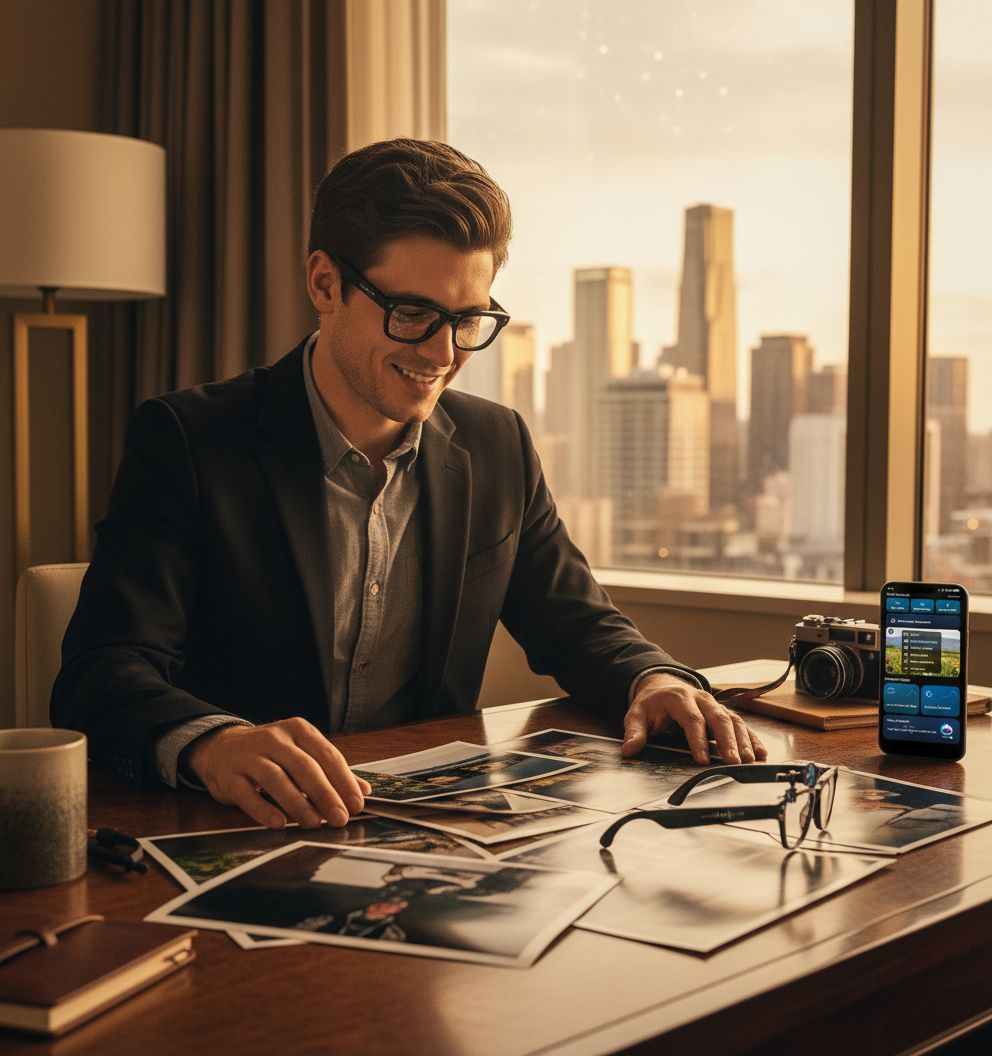
I was mid-sentence in a Tokyo convenience store, pointing at a label I couldn’t read, when the Nllosa AI Smart Glasses quietly translated the entire thing into my ear before I could finish the thought.
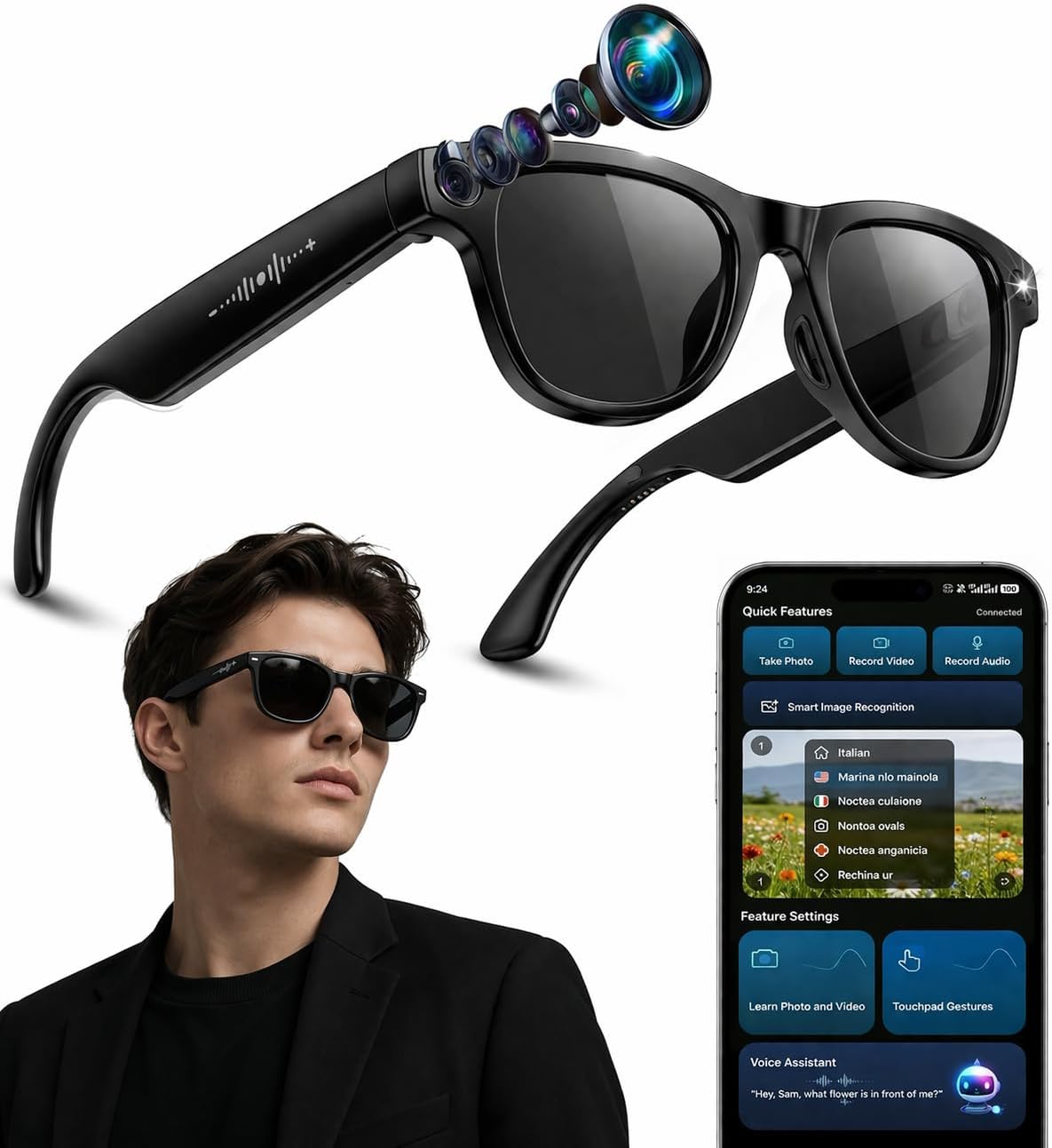
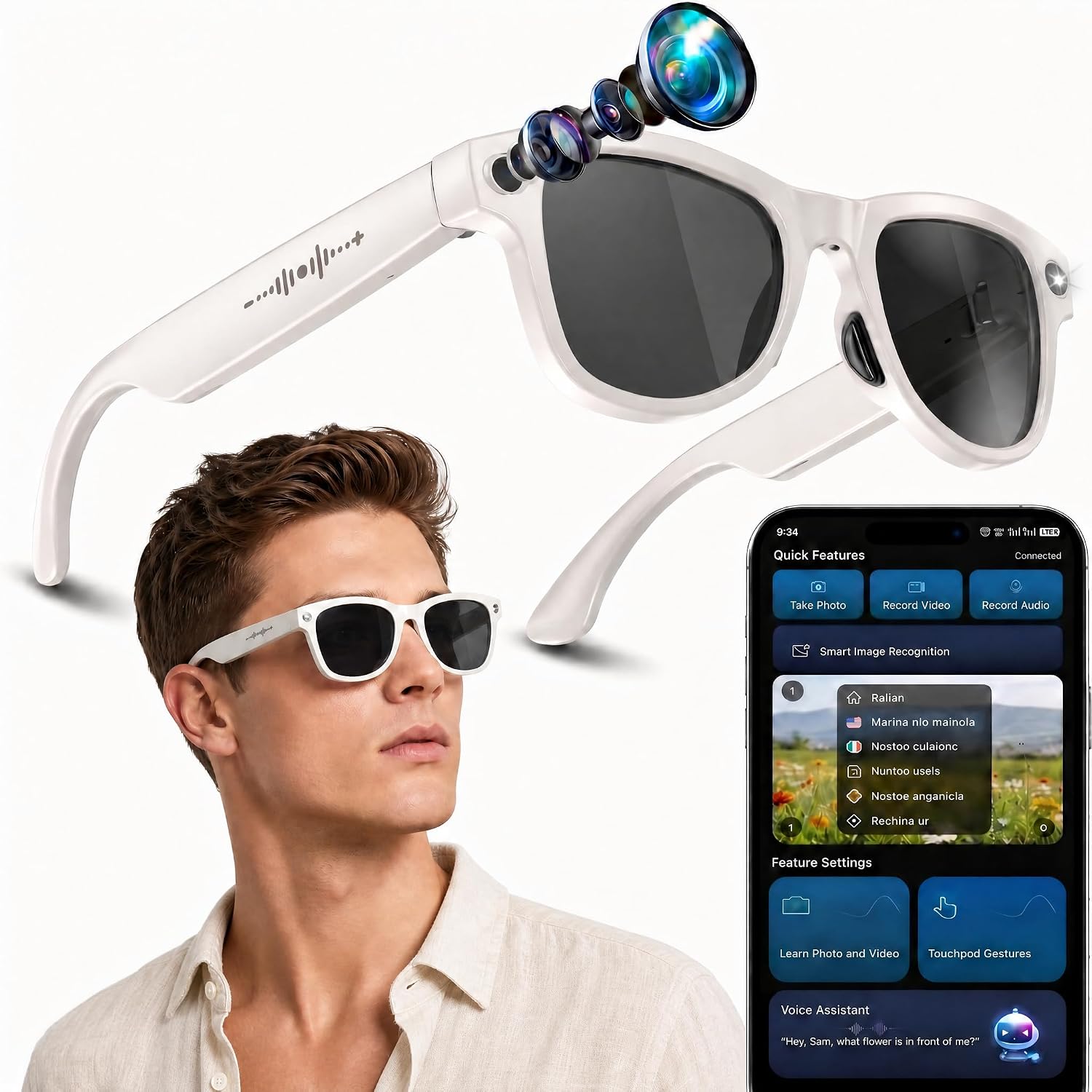
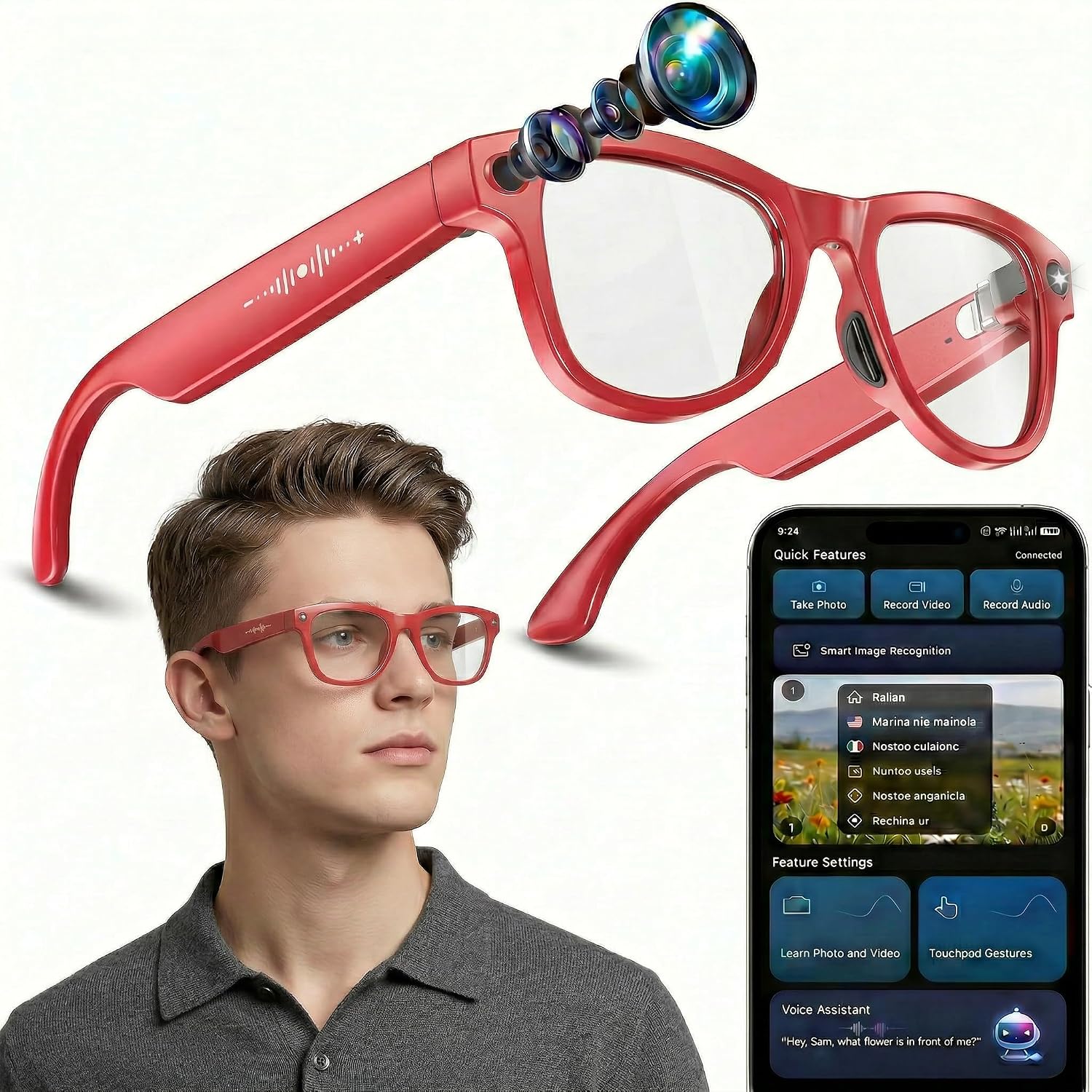
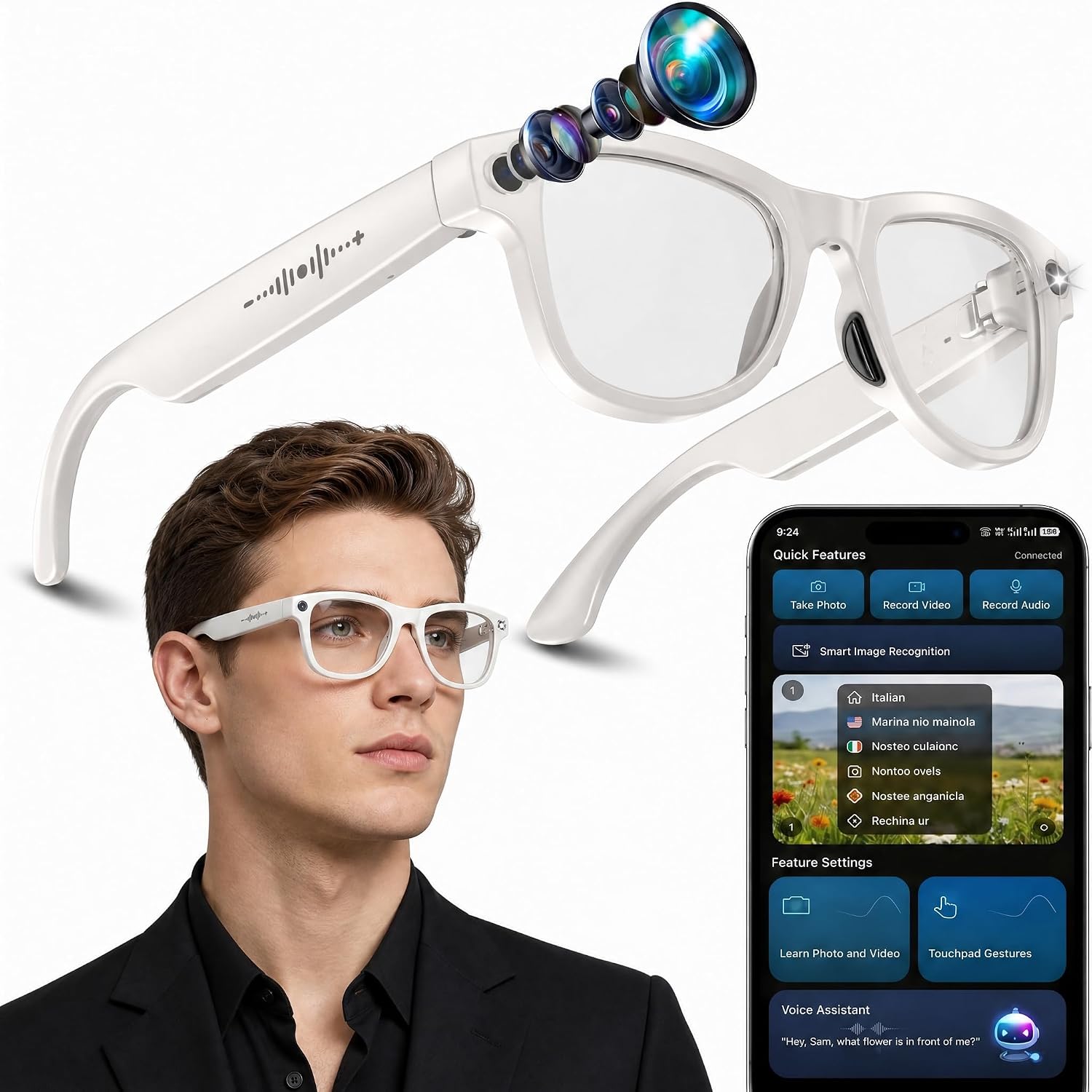
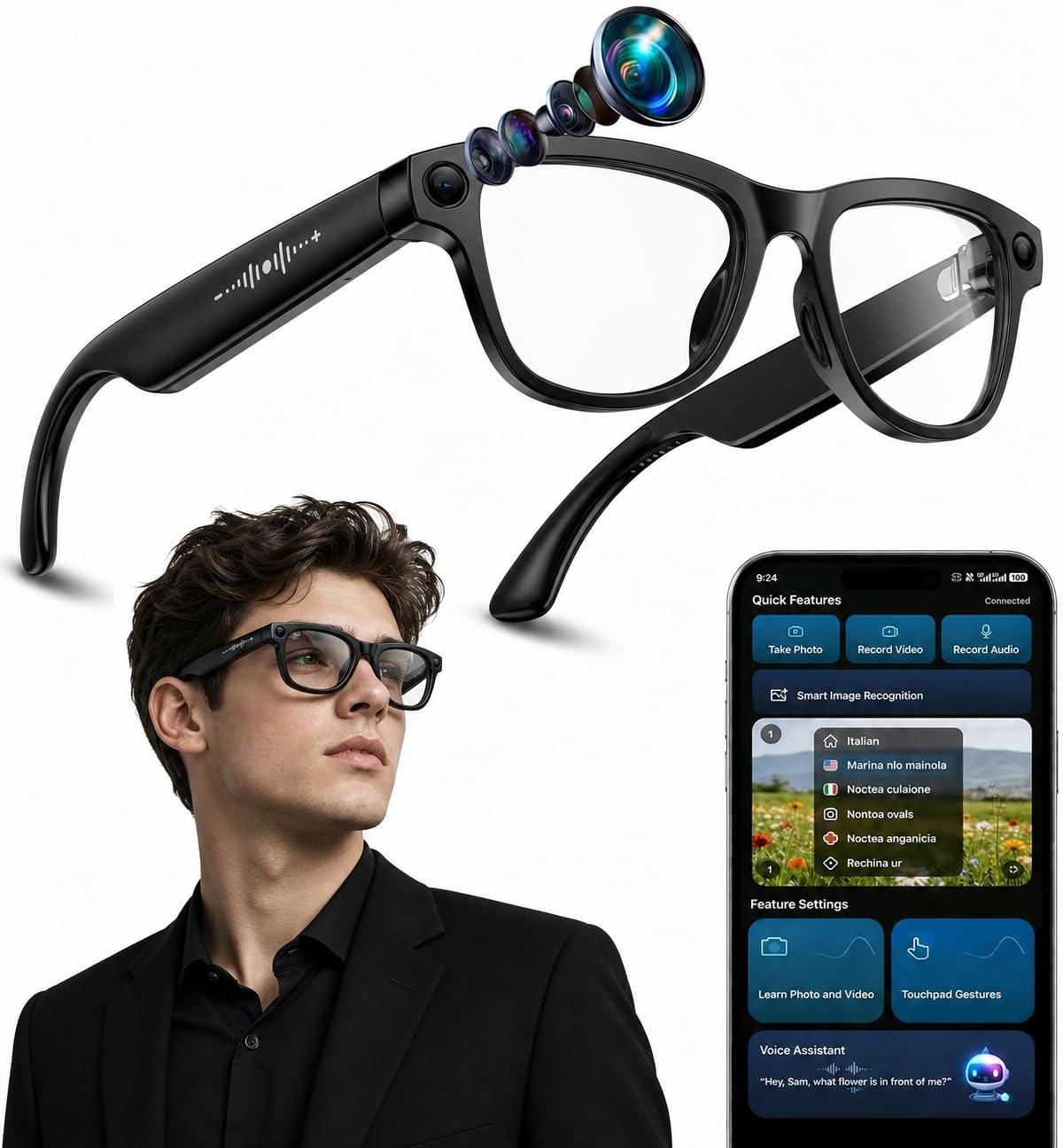
The pair sitting on my nose looked, from the outside, like something you’d grab off a rack at an optician’s. Matte black frame, clean aluminum temples, no glowing rings or antenna fins jutting out the back. Nobody on the Shinkansen glanced twice. But behind the right lens sat a camera. Inside each arm, a speaker aimed at my ear canal. And somewhere in the firmware, a translation engine was pulling down 139 languages faster than I could raise an eyebrow. The Nllosa AI Smart Glasses had already done the thing I bought them to do, and I was still figuring out how to pair them.
The First Time I Used It
I found these while spiraling through a late-night rabbit hole of travel tech picks and “will this survive a carry-on” tests. The product title was almost comically long, and the render looked like every other fashion-forward tech frame promising the world. I almost kept scrolling. What stopped me was a single detail buried in the spec list: real-time translation with open-ear audio delivery. No earbuds to fumble, no phone to hold up.
I ordered them on a Wednesday. They arrived Friday in a box that felt intentional and not extravagant. That Friday evening I spoke Italian into the microphone on my porch and heard English back through the temple speaker in under two seconds. That was enough to clear my weekend calendar.
How It Actually Performs
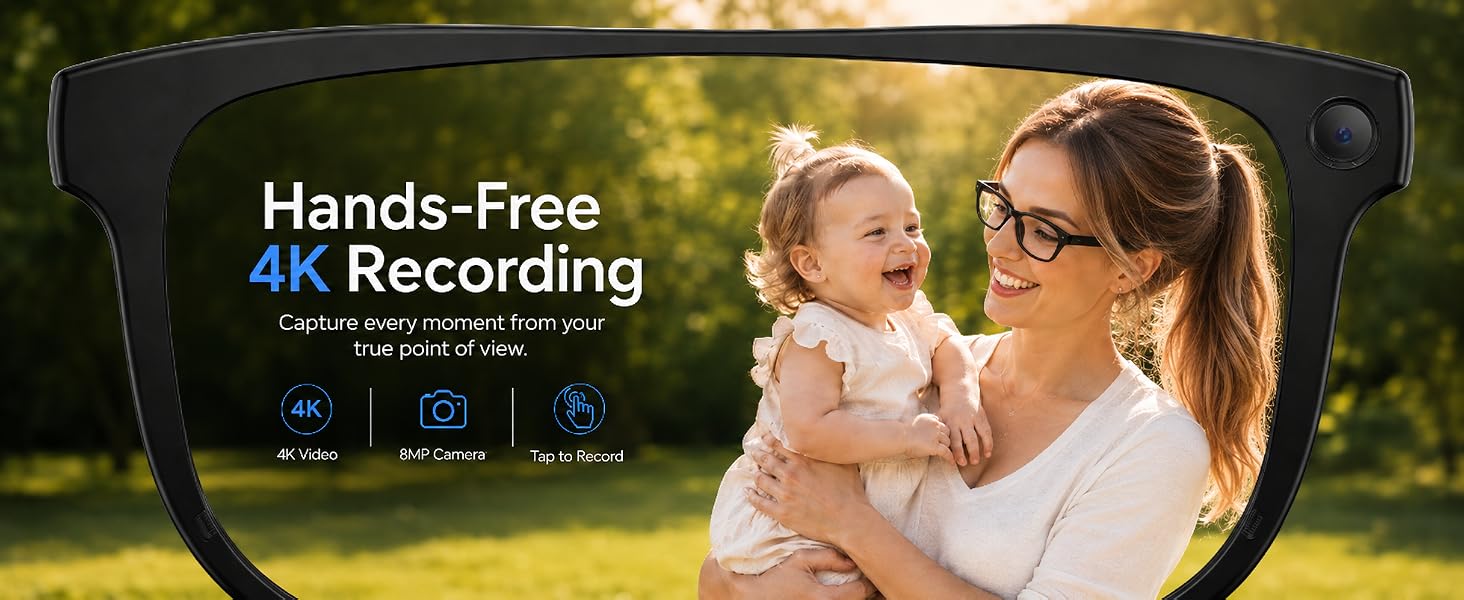
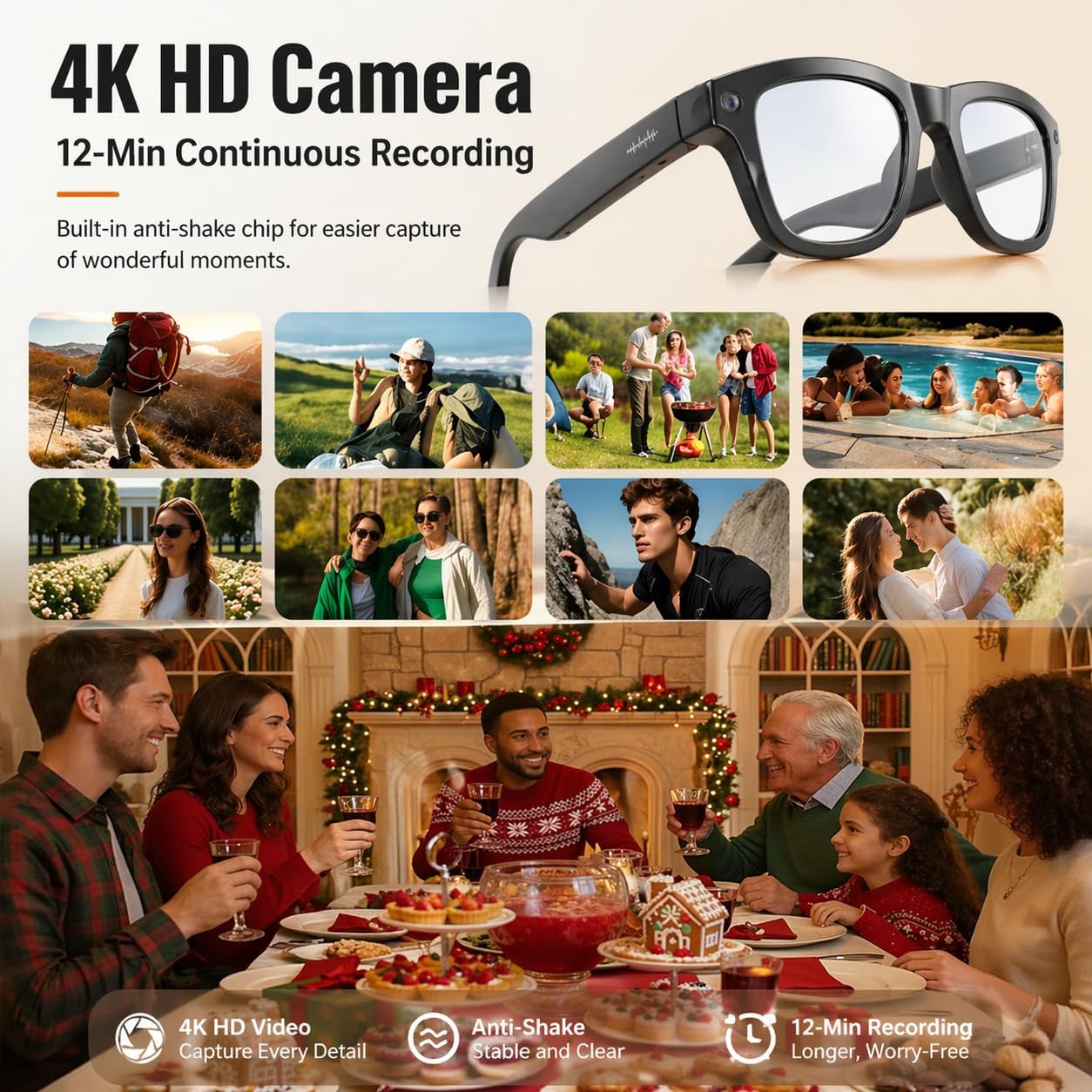
The 8MP sensor captures at 1200P resolution, which the brand sometimes markets as “4K equivalent.” That framing is generous, but the footage itself is genuinely usable. Colors are accurate in daylight, there’s minimal barrel distortion, and the stabilization is better than I expected from a frame this thin. Low-light performance drops off past dusk, which is the honest caveat that no spec sheet mentions. For outdoor travel vlogging, daytime meetings, or capturing a conference keynote, it holds up.
“Every translator app I’ve tried makes me feel like a tourist. These glasses made me feel like I’d studied.”
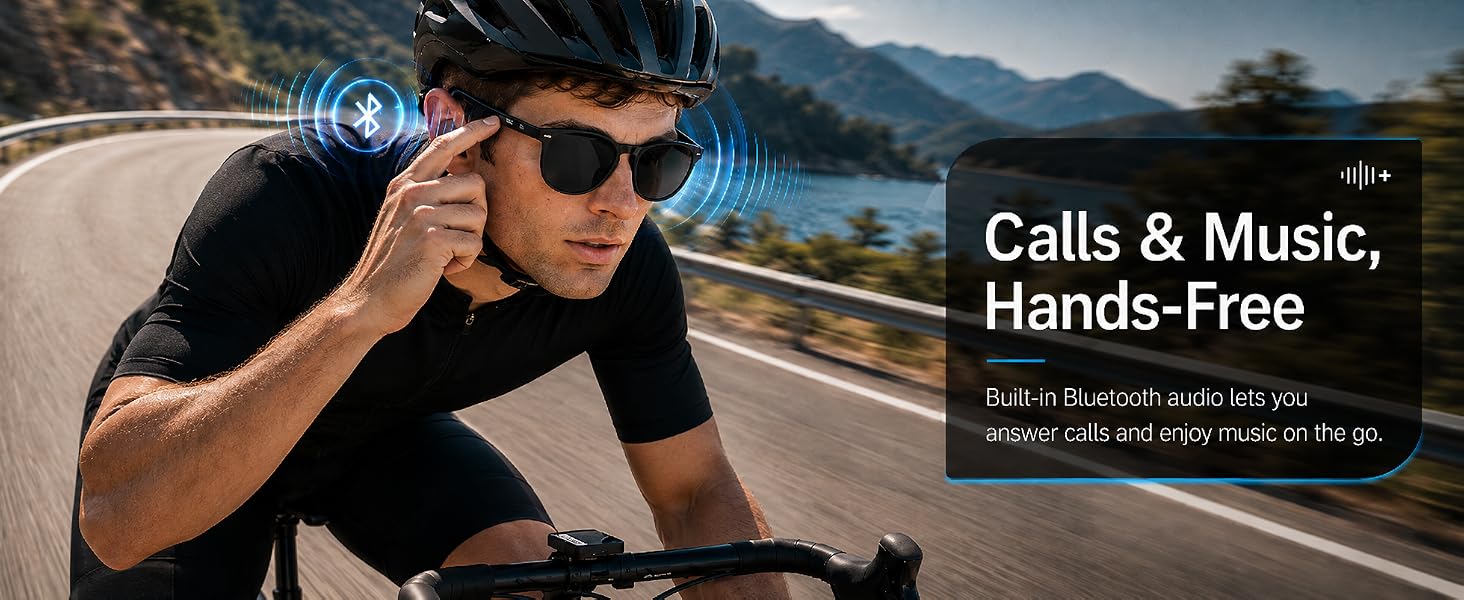
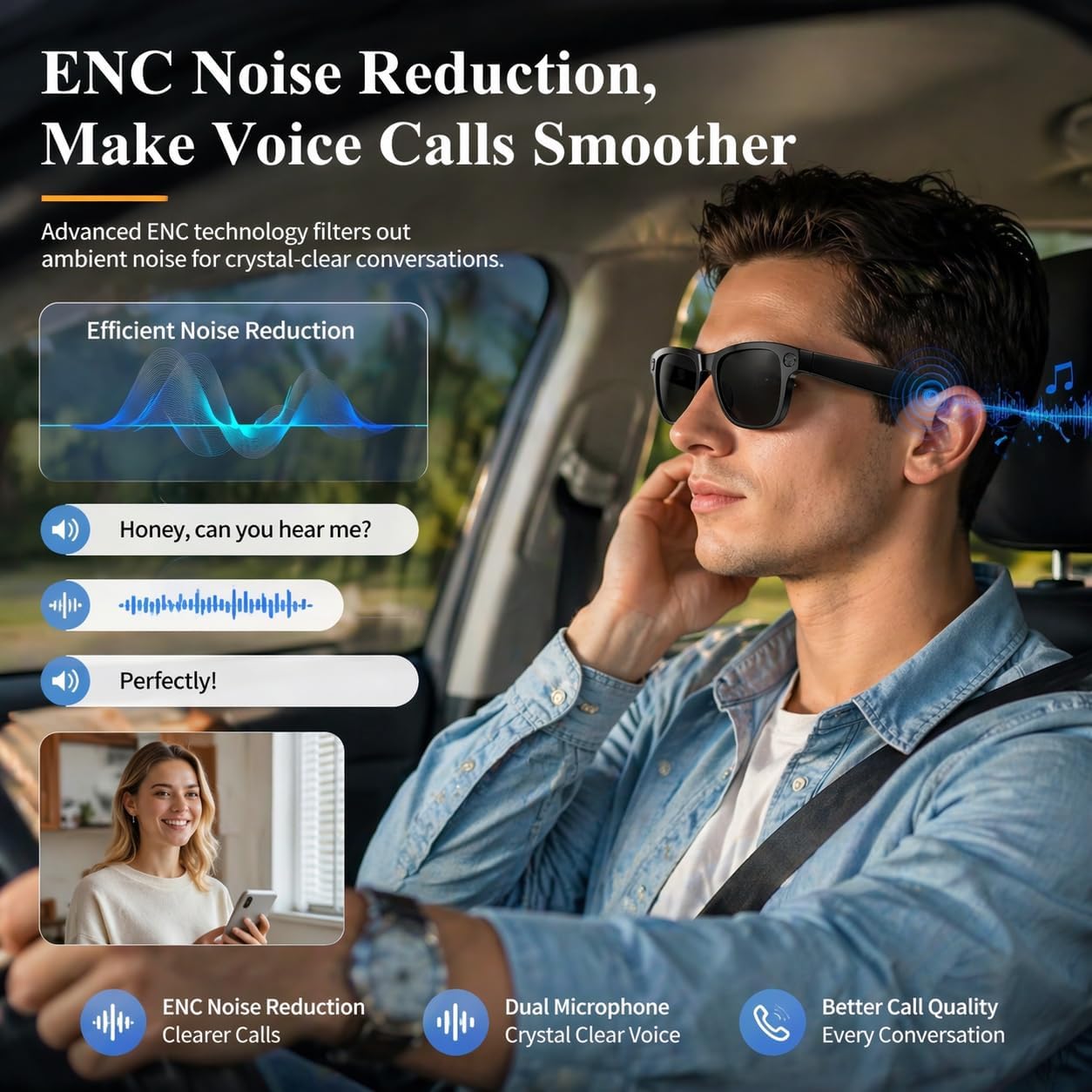
Battery life is rated at eight hours and in my testing landed closer to six under heavy camera and translation use, which is still a full working day if you’re selective. The open-ear audio is genuinely pleasant. It doesn’t seal off your surroundings, which matters enormously in a travel context where you want to hear announcements, traffic, and the person standing next to you. Wearable audio has been trending this direction for the past two years, and this implementation feels like a natural fit for the category. There is some audio bleed at higher volumes in quiet rooms, which is worth knowing before you use these in a library or on a silent train.
How I Actually Used It
Setup 1: Tuesday Standup, Three Clients, Two Continents
My work from home setup lately involves a standing desk, a dual monitor arm, and more browser tabs than I want to admit. What it does not involve is a clean, dedicated space where I can wear an earpiece without looking like airport security. The Nllosa glasses solved that quietly. During a video call with a client team based in South Korea, I had the real-time translation running through the temple speaker while my camera showed my face, not a device. The translation lag was about one and a half seconds, which sounds significant until you realize I was getting spoken Korean converted to English in my ear while the speaker was still finishing their sentence. It felt like a superpower with a slight delay. A fair trade.
Setup 2: 11-Hour Flight, Aisle Seat, No Overhead Space
I wore these from gate to gate on a transatlantic leg and used the open-ear audio for podcasts and ambient music. The glasses weigh almost nothing, and after the first hour I stopped noticing them entirely, which I cannot say for any over-ear headphones I own. The camera came in handy over the Alps, where I grabbed about forty seconds of footage through the cabin window that I would never have bothered pulling out a phone for. The USB-C charging meant I could top up from the seat’s power port without a proprietary cable in my bag. That alone eliminated a small but real anxiety I carry on long-haul trips.
Setup 3: Street-Level Vlogging in a City I Didn’t Know
In Lisbon, I spent a Saturday morning walking through the Alfama district with the glasses recording and the translation engine on standby. Menu boards, market signs, a long conversation with a ceramics vendor who spoke no English: all of it moved faster than I expected. The first-person camera angle is genuinely different from anything mounted on a gimbal or held at arm’s length. It’s the angle your eyes actually see, which gives travel footage an intimacy that’s hard to replicate any other way. The microphone picked up ambient sound well, though wind noise above about 15 mph becomes a factor.
What Other People Are Saying
This product launched recently enough that the review pool is still shallow. A handful of early ratings exist, and they skew enthusiastically positive, though that’s the nature of first-wave tech adopters who sought the product out intentionally.
My read: the people who found these early are exactly who they’re designed for. Frequent travelers, remote workers, and multilingual households are the ones generating the signal here, and their satisfaction tracks with my own experience.

Who Should Skip It
If your priority is cinematic video quality, these won’t replace a mirrorless camera or even a well-specced smartphone. The sensor is capable, not exceptional, and serious content creators will feel the ceiling quickly. If you wear prescription lenses and aren’t willing to invest in prescription-compatible frames separately, the fit may also be a limitation worth investigating before purchasing. Anyone who needs deep bass, noise cancellation, or private audio from their wearable audio device will find the open-ear design frustrating rather than freeing. And if you’re buying primarily for the translation feature but are frequently in areas with poor mobile connectivity, know that the real-time translation depends on a working data signal. It’s not fully offline. That matters.
What It Replaces on My Desk
I had a translation app I used to hold up like a tourist’s periscope, a small action camera that lived in my chest rig, and a pair of open-ear sport headphones I only wore outdoors. Between the three, I was juggling three charging cables, two app subscriptions, and a mounting system that made me look like I was filming a deposition. The Nllosa glasses effectively collapsed all three into one frame that I wear on my face and forget about. There’s something clarifying about that kind of consolidation. It isn’t magic. It’s just good design solving a real problem without announcing itself. The action camera is now in a drawer. The translation app is uninstalled. The sport headphones are still around for runs, but for everything else, they’ve been retired.
If you’re browsing portable charging solutions for travel or putting together a full carry-on tech kit, these glasses pair naturally with a slim power bank. And if you’re looking for audio-forward wearables to compare, our travel headphone category has a range of options that sit alongside rather than compete with this form factor.

FAQ
Do these work with both Android and iPhone?
Yes. The glasses pair via Bluetooth and work with iOS and Android without any platform-specific limitations. The companion app, where available, handles firmware updates and language settings.
How long does a full charge take?
Roughly 90 minutes from empty to full via USB-C. With the claimed eight-hour battery ceiling, that charge-to-runtime ratio is one of the better ones in this wearable category.
Can I use these during video calls without looking odd on camera?
Entirely possible. The matte black frame reads as regular eyewear on most video calls. Nothing about the design signals “smart glasses” to someone seeing you from the chest up on a screen.
Does the build quality match the brand’s reputation?
Nllosa is early in its brand arc, so reputation is still being built. But the aluminum temples, the hinge feel, and the overall finish read above what you’d expect at this tier. Nothing creaks, nothing rattles, and the matte black resists fingerprints better than glossy alternatives in the category.
What’s the return or warranty situation?
Policies vary by retailer, so confirm before purchase. Generally speaking, the product ships with standard consumer electronics coverage and most major platforms extend buyer protection on top of that.

The Verdict
Three weeks after that moment in the Tokyo convenience store, I still reach for the Nllosa AI Smart Glasses before I reach for my phone when I’m heading out the door. That’s the clearest signal I can give you about how well something has integrated into a routine. For anyone whose life involves regular travel, remote collaboration, or just the daily friction of a multilingual world, these glasses are solving a cluster of problems with one piece of hardware you barely notice you’re wearing. They won’t satisfy a filmmaker, and they won’t replace dedicated audiophile gear. But for the work from home professional who also spends time in airports, meetings, and unfamiliar cities, the value reads well above what you’d expect in this tier. This is the kind of wearable that makes more sense the more places you take it. Explore our editor’s top tech picks or browse the full tech gift ideas list if you’re looking for what pairs well alongside it. And if you want a broader benchmark for where smart wearables are heading right now, Wired’s gadget coverage and Engadget’s latest reviews are tracking the same trajectory these glasses are riding. The Nllosa AI Smart Glasses are the best smart glasses for travel and remote work I’ve tested at this price point, and I don’t expect to stop wearing them anytime soon.
Every Angle
The product as photographed for Amazon — hero, angles, ports, detail.

As an Amazon Associate I earn from qualifying purchases.