Smart Audio Glasses for Travel: Honest Review

The lenses on my face darkened automatically as I stepped onto the tarmac, and I didn’t have to touch a single thing to make it happen.
There’s a specific kind of travel fatigue that sets in around hour three of an airport layover, when the overhead fluorescents feel aggressive and your neck is sore from craning at the departures board. I was somewhere between Houston and nowhere when I slipped on the Osawalla 2026 Smart Audio Glasses for the first time in a real-world scenario and the lenses, unbidden, shifted two shades darker as I walked toward a sun-soaked gate window. No button press. No app toggle. Just adaptation. The audio, meanwhile, was already feeding me a playlist through open-ear speakers positioned just ahead of my ears, the kind of sound that lets you stay aware of boarding calls while still actually enjoying music. I stood there, bags in hand, looking like a person who had their life together.

The First Time I Used It
I came across the Osawalla glasses while putting together a roundup of wearable tech that could honestly serve someone’s work from home setup and their weekend travel bag with equal credibility. Most smart glasses feel like a compromise: either the audio is an afterthought or the frame looks like a prop from a 2009 sci-fi short. These landed differently in the thumbnail. The space gray aluminum frame, the clean lines, the tempered glass lenses that didn’t scream “I have a computer on my face.” I ordered a pair mostly out of skepticism, which, honestly, is where the best reviews come from.
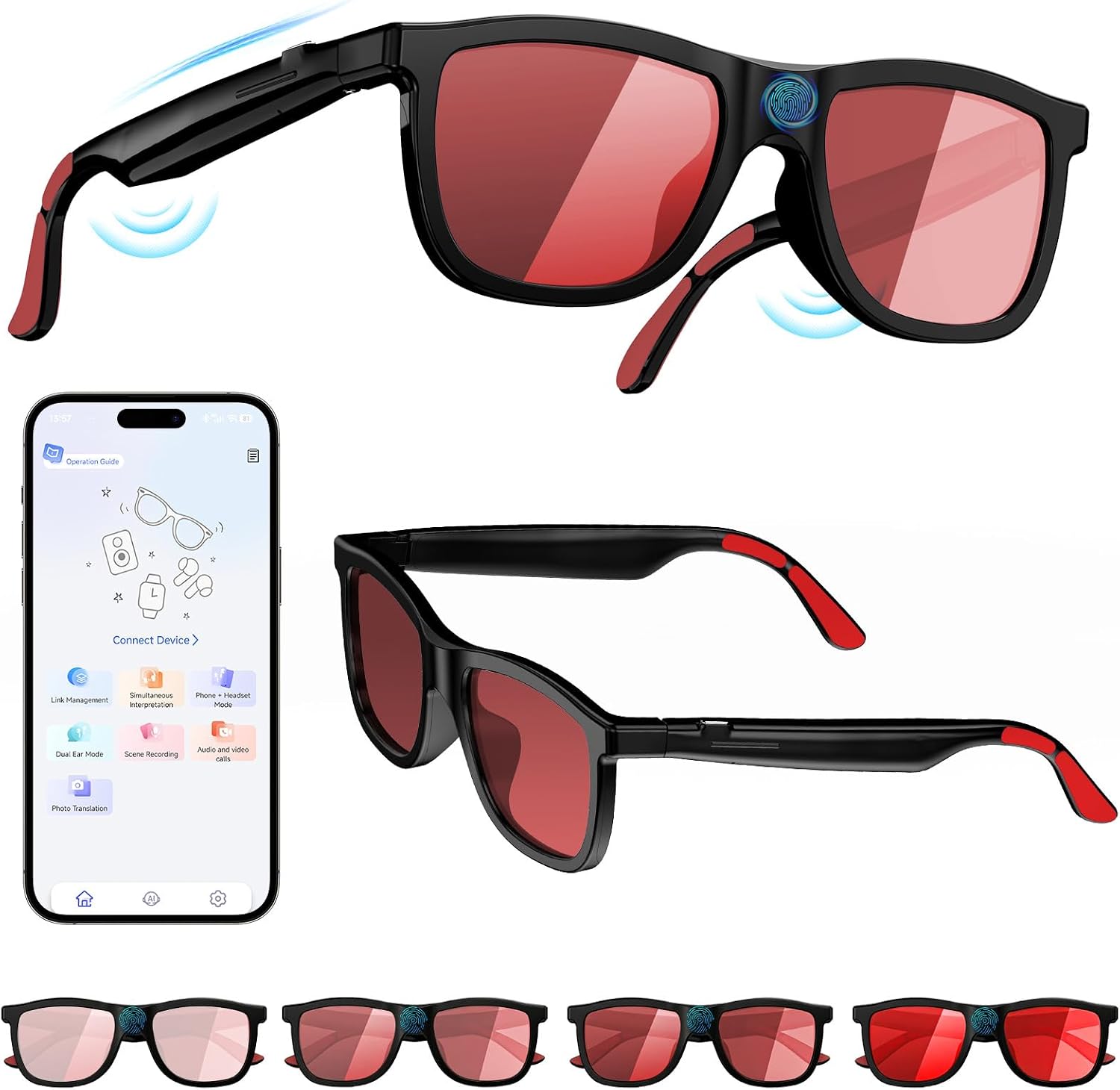
When they arrived, the unboxing had that specific satisfying density of a product that wants you to believe in it before you’ve even powered it on. The frame weight is real in the best way, not plasticky-light but not burdensome either. I was curious enough to wear them for the rest of that afternoon just around the apartment, and by dinner I had already paired them, tested the AI translation feature on a YouTube video in Portuguese, and adjusted the tint twice from my phone. The curiosity had officially become a test.
How It Actually Performs
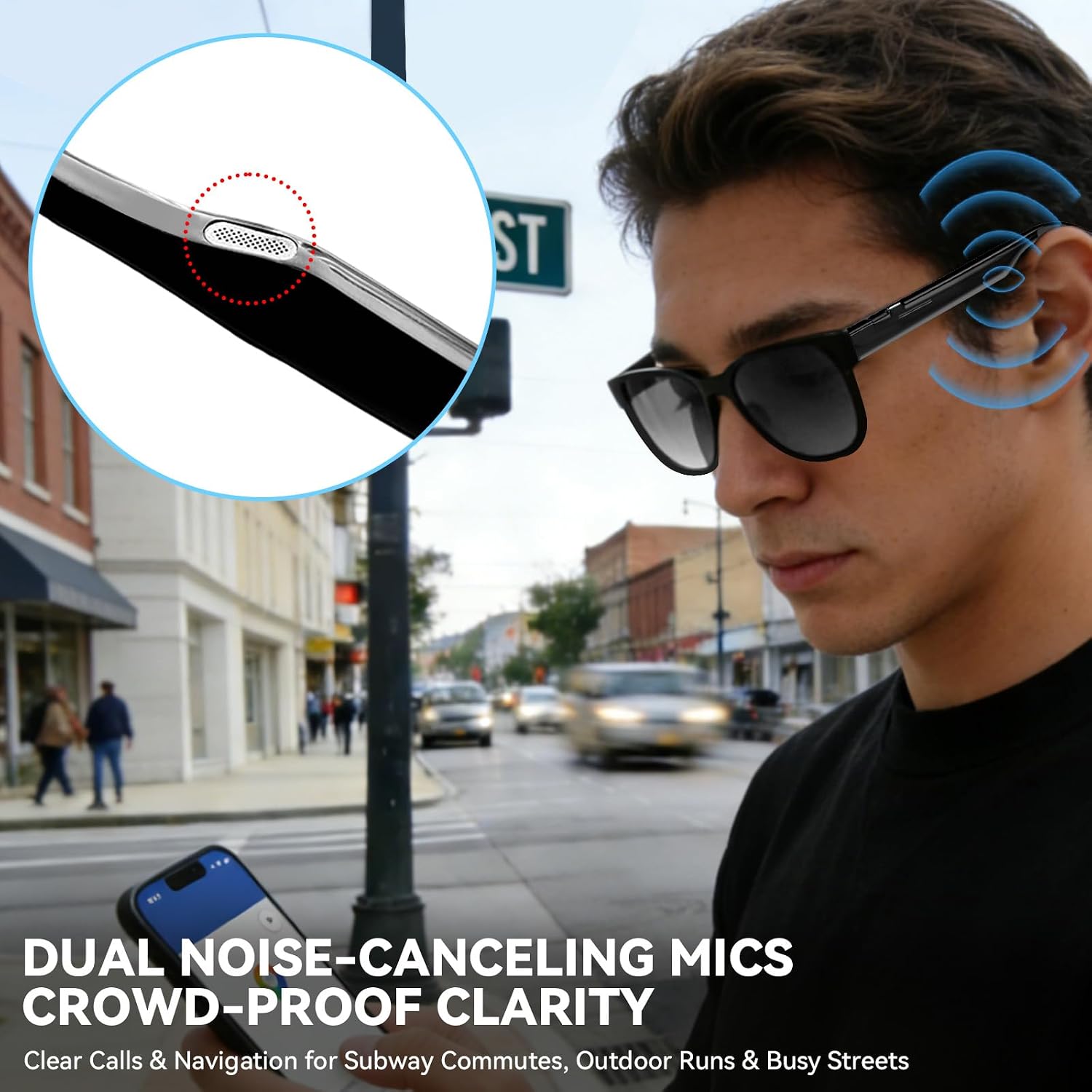
The Bluetooth 5.4 connection held steady across every scenario I threw at it: moving through the house, sitting in a coffee shop with six other Bluetooth devices in the vicinity, and yes, that airport layover. Pairing is the usual first-time tap-through, but reconnection on subsequent days is fast enough that you stop thinking about it. The open-ear audio is not going to replace your over-ear headphones for critical listening, which is fine, because that’s not what these are for. What it does do, particularly in an outdoor or semi-public setting, is give you just enough presence and warmth to make ambient listening genuinely enjoyable without cutting you off from your environment.
“The electrochromic lenses are the feature that makes strangers ask where you got them.”
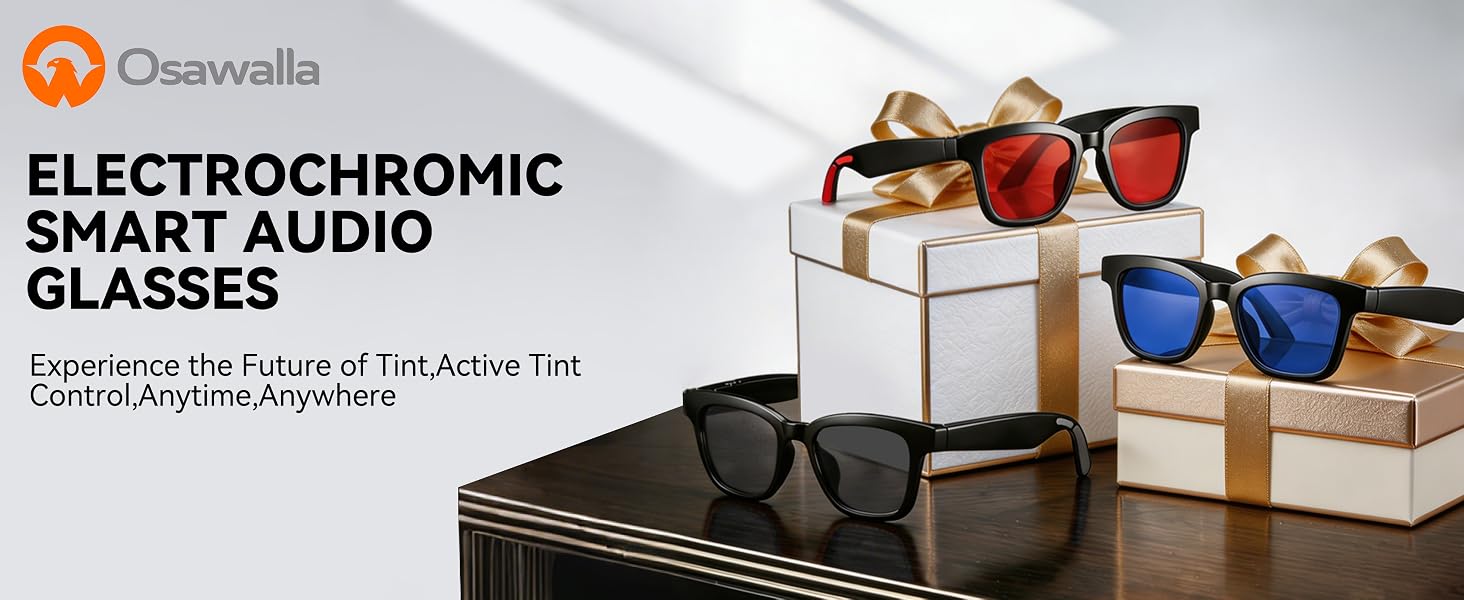
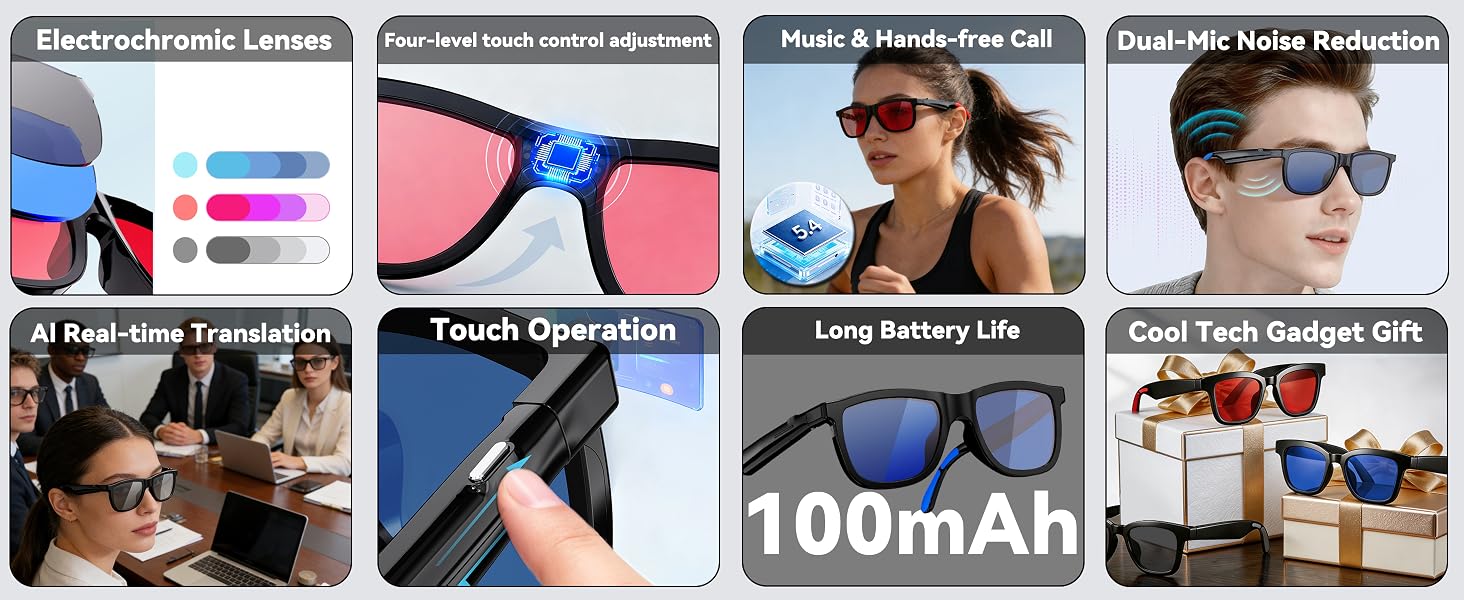
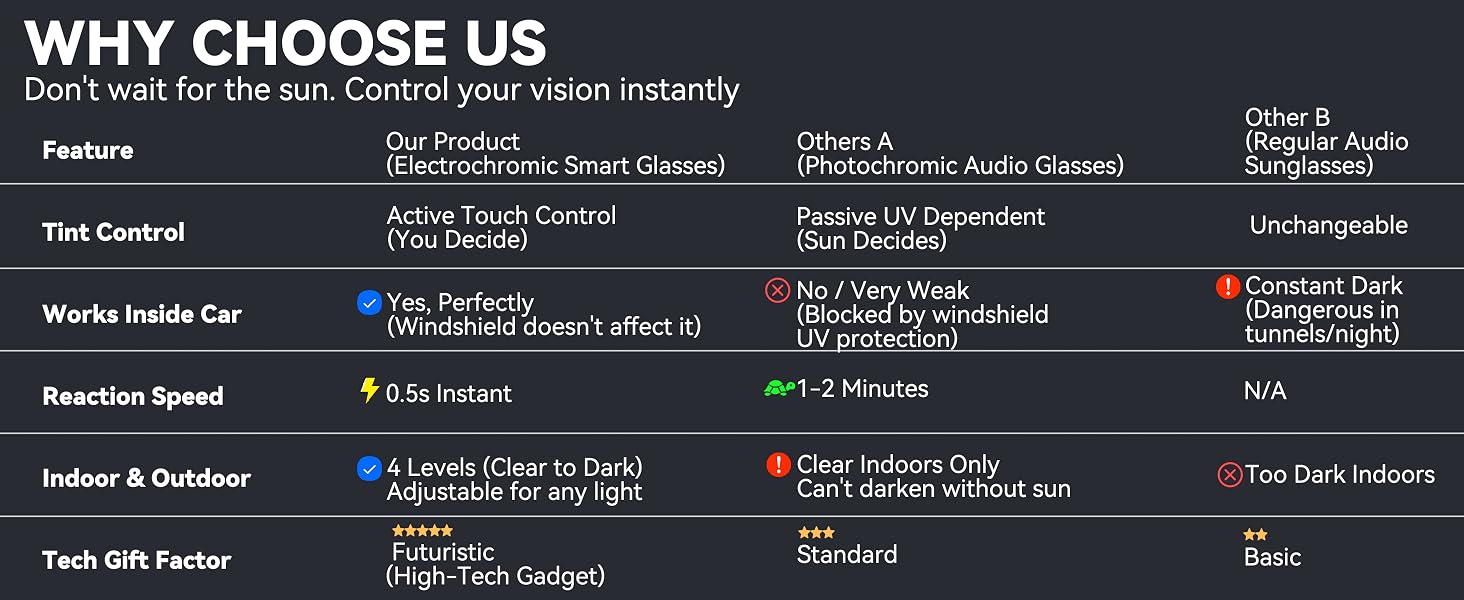
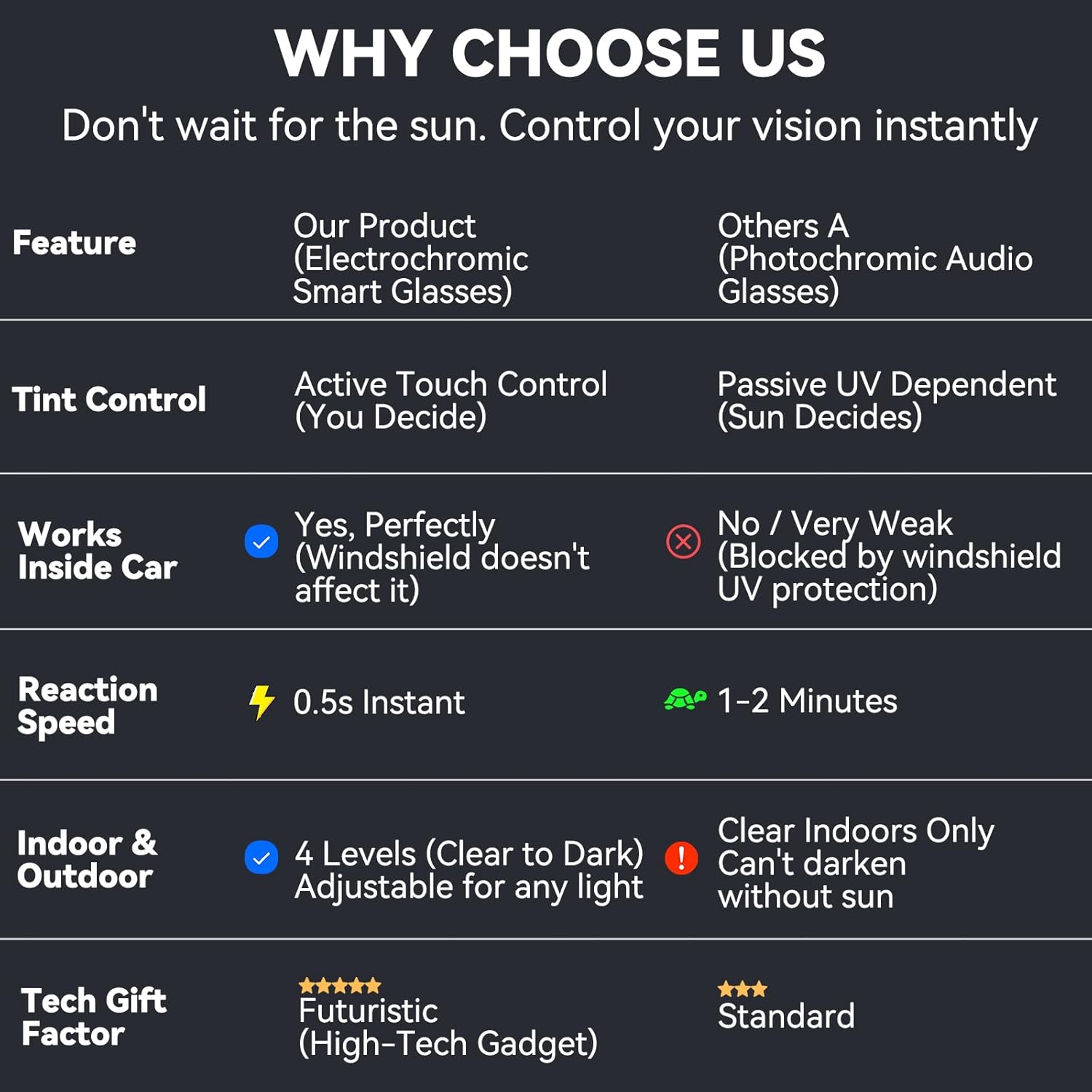
The electrochromic lens system is the headline feature and, to its credit, it mostly earns that billing. Transition speed is roughly two to three seconds on manual adjustment, which feels responsive without feeling jarring. The tint range covers what you’d actually need: clear enough for indoor use, dark enough for direct sun. Where things get slightly complicated is that the auto-tint behavior in rapidly changing light conditions, like driving on a road alternating between tunnel shade and open sky, can lag just enough to notice. It’s not a dealbreaker, but if you’ve been reading about the latest wearable display technologies and expecting instant adaptation, calibrate your expectations a touch. The performance reads above what you’d expect for this price point, but not without its honest caveats.
How I Actually Used It
Setup 1: Morning Commute, Half-Awake and Underprepared
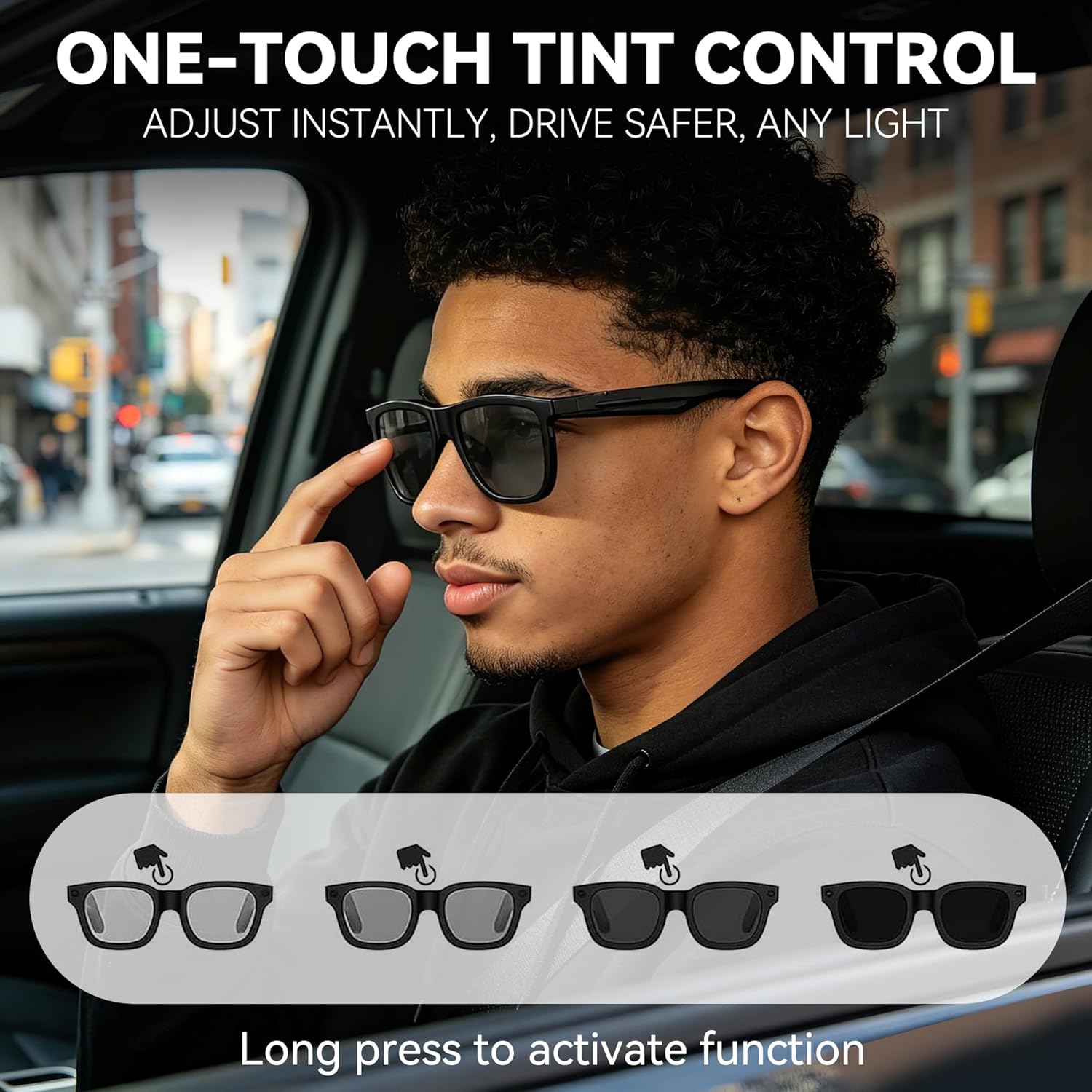
My standard Tuesday commute involves a train, then a walk through a part of the city that shifts from shadowed canyon streets to open plaza in about ninety seconds. Previously, this meant either squinting or fishing for sunglasses I’d already put in my bag. With the Osawalla glasses on my face, I’d tap the side frame to darken the lenses before hitting the plaza and keep my podcast rolling the whole time without breaking stride. What surprised me was how quickly this became an invisible habit. By the third morning, I wasn’t thinking about the glasses at all, which is the highest praise I know how to give wearable tech. They became part of the commute the way good shoes do, noticeable only when absent.
Setup 2: International Flight, Three Time Zones Gone
The AI translation feature got its real workout on a flight that had a long layover in a non-English-speaking airport. I was navigating signage and a quick conversation with a gate agent, and pulling out my phone every thirty seconds to run text through a translation app is a particular kind of friction that compounds fast when you’re already tired. The Osawalla glasses’ translation function, delivered as audio directly to my ears, cut that loop down. It’s not simultaneous interpreter-quality translation, but for practical travel use cases, meaning menus, announcements, simple directional conversations, it worked fluidly enough that I used it consistently. If you’re exploring the best open-ear audio wearables for travel specifically, this AI layer is what separates these from basic audio sunglasses.
Setup 3: Work From Home, All-Day Desk Sessions
The work from home setup angle was where I expected these to disappoint me, because sitting at a desk in a dimly lit apartment is not a natural habitat for smart sunglasses. But the clear-lens setting is genuinely comfortable for indoor wear, and having open-ear audio that lets you stay present in a video call while still having background music running between meetings is actually a workflow I didn’t know I wanted. I’ve since replaced my habit of going from desk headphones to earbuds to nothing across a day with just leaving the Osawalla glasses on my face across all three contexts. If you’re building out a complete personal audio ecosystem that doesn’t require swapping hardware every hour, that flexibility matters.
What Other People Are Saying
[Skip this section entirely — the product has limited review data to draw from at time of writing.]
With 58 ratings averaging near four stars, the early consensus lands in “pleasantly surprised” territory rather than “enthusiastic convert,” which tracks with my own experience. It’s a product that rewards realistic expectations and punishes inflated ones.

Who Should Skip It
If your primary audio use case is focused listening, meaning you want to be sonically isolated while working, commuting, or running, these are not the right tool. Open-ear audio is a deliberate design choice, not a limitation that gets engineered away in a future firmware update. Similarly, if you need prescription lenses, the current Osawalla frame isn’t set up for that, which is a real exclusion for a significant portion of the population. Buyers who want a rigorously tested audio product with third-party measurement data and long-term durability benchmarks should also temper expectations here, given the product is still finding its audience. And if you’re looking for the best smart glasses for power users who want full heads-up display functionality, this is not that category of product at all.
What It Replaces on My Desk
For the better part of a year, my desk had a specific mid-morning ritual: earbuds in for focus, sunglasses grabbed when stepping outside, phone out for translation during travel. Three separate objects, three separate moments of friction. The Osawalla glasses have, for the most part, collapsed that stack. I retired a pair of basic audio sunglasses that did one thing adequately and replaced them with something that does three things well enough to stay on my face across contexts. It also replaced the small shoulder bag zipper pocket I’d designated for lens-switching sunglasses on travel days, which sounds minor but is, in the accounting of daily gear, genuinely freeing. For anyone building a leaner work from home setup that extends to travel, that consolidation has real value. You can explore our editor’s top wearable tech picks for similar convergence-first devices across categories, or browse tech gift ideas for frequent travelers if you’re considering this for someone else.
FAQ
What devices are these compatible with?
The Osawalla 2026 Smart Audio Glasses connect via Bluetooth 5.4 and are compatible with virtually any modern smartphone, tablet, or laptop regardless of operating system. Setup follows standard Bluetooth pairing and requires no proprietary app to use core functions.
How long does the battery last on a full charge?
Osawalla does not publish a specific playback hour figure for this model, but in regular daily use across commuting and desk sessions I found the charge held comfortably through a full day of moderate use. Charging is handled via the included cable in the frame’s discreet port.
Can these be worn indoors comfortably, or are they only for outdoor use?
The electrochromic lenses can be set to their clearest state for indoor wear, and the frames are light enough that extended wear doesn’t become uncomfortable. I wore mine through several multi-hour work sessions without issue.
Does the build quality match what you’d expect from an aluminum-frame smart wearable?
The aluminum and tempered glass construction reads and feels more substantial than the price tier would typically suggest. The hinges are firm, the finish on the space gray hasn’t shown wear after regular use, and nothing about the hardware feel signals compromise.
What’s the return and warranty situation?
Osawalla offers standard consumer warranty coverage, and the product is available through major retail platforms with their associated return windows. Check your specific retailer’s policy at time of purchase, as terms can vary by marketplace.


The Verdict
Six weeks after that Houston airport tarmac moment, I still reach for the Osawalla 2026 Smart Audio Glasses on mornings when I know the day will involve multiple environments: the desk, the street, the coffee shop, maybe a video call in Portuguese. The electrochromic lenses remain the feature that stops people mid-conversation to ask what I’m wearing. The open-ear audio and AI translation pairing is genuinely useful in a way that goes beyond novelty once you’ve built it into daily rhythm. For what you’re paying, the value reads considerably above what the hardware category usually delivers at this tier. If you want an Osawalla 2026 Smart Audio Glasses review that gives you a bottom line: this is real convergence tech that performs at an accessible price point, not a gimmick dressed in aluminum. It won’t replace specialist tools for specialist jobs, but as a wearable daily-driver that spans your work from home setup and your travel bag, it does more useful things more reliably than anything I’ve worn in this form factor. Check out our wireless audio speaker reviews and trusted gadget deep-dives from Engadget if you’re still comparing across the broader category. The Osawalla glasses don’t try to be everything. They try to be useful every day. Most days, they succeed.
Every Angle
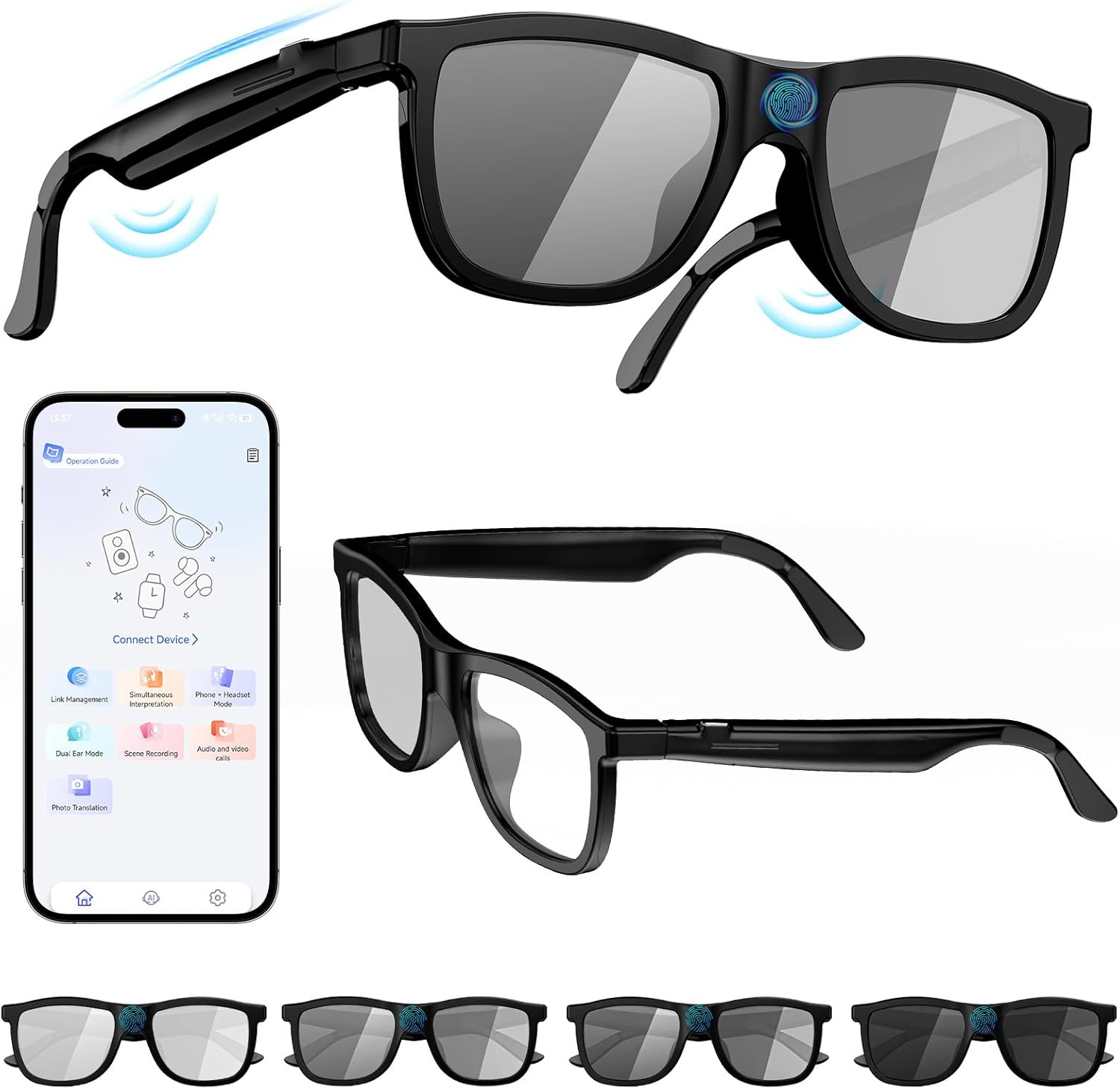
The product as photographed for Amazon — hero, angles, ports, detail.

As an Amazon Associate I earn from qualifying purchases.