AI Smart Glasses for Travel: Honest Review

After three weeks of wearing the Ray-Ban Meta Skyler smart glasses to coffee shops, airports, and a very confused Tuesday morning standup, I finally understood what hands-free actually means.
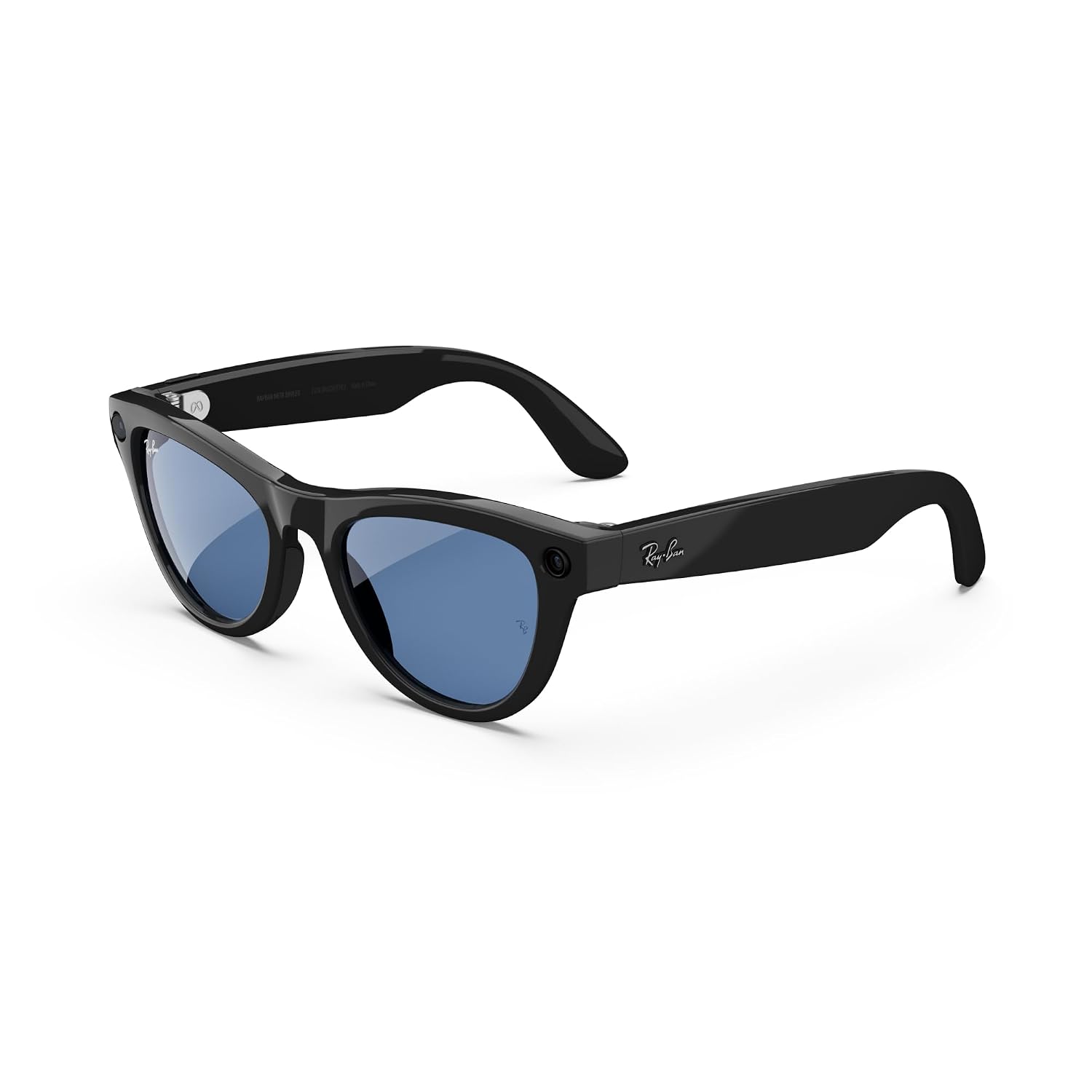
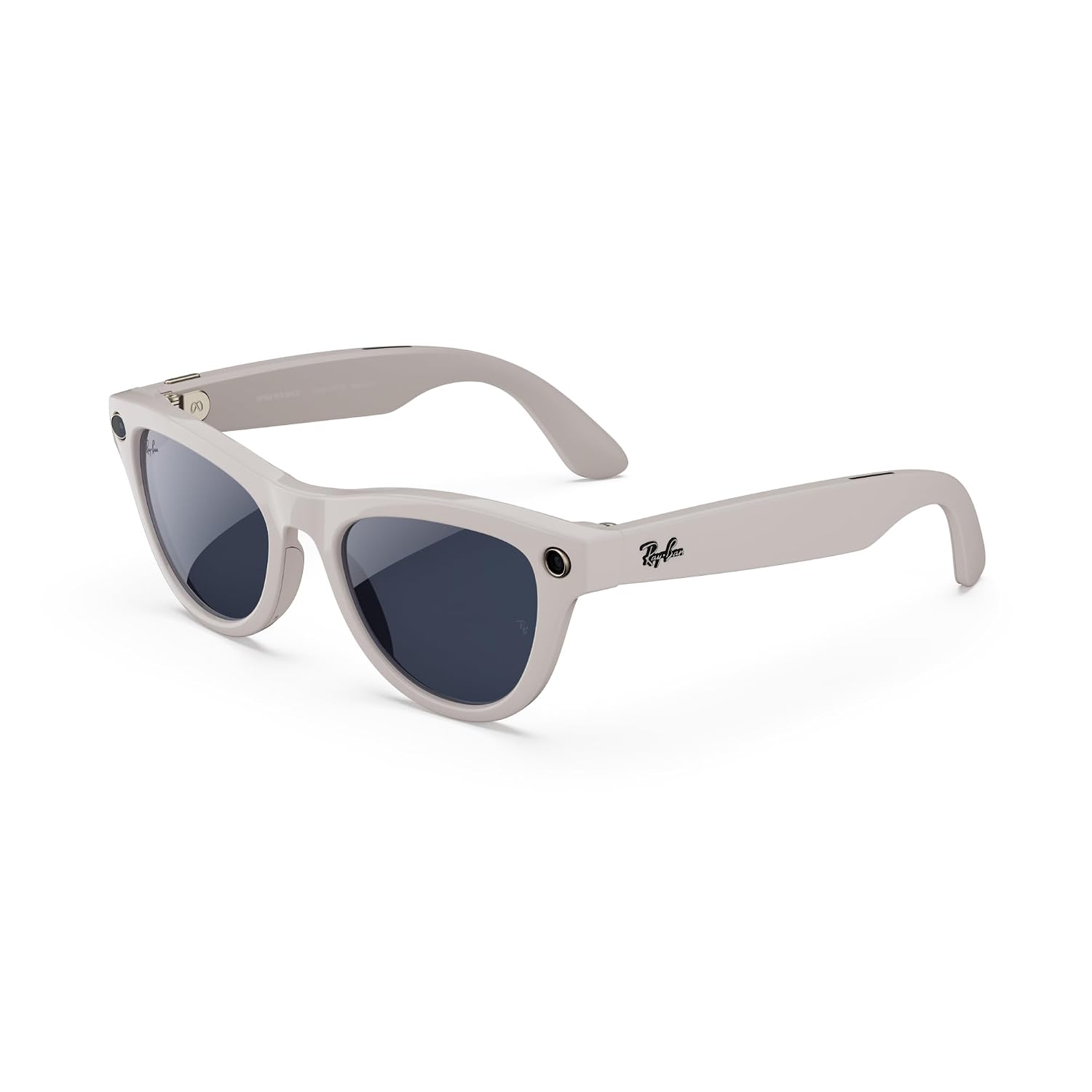
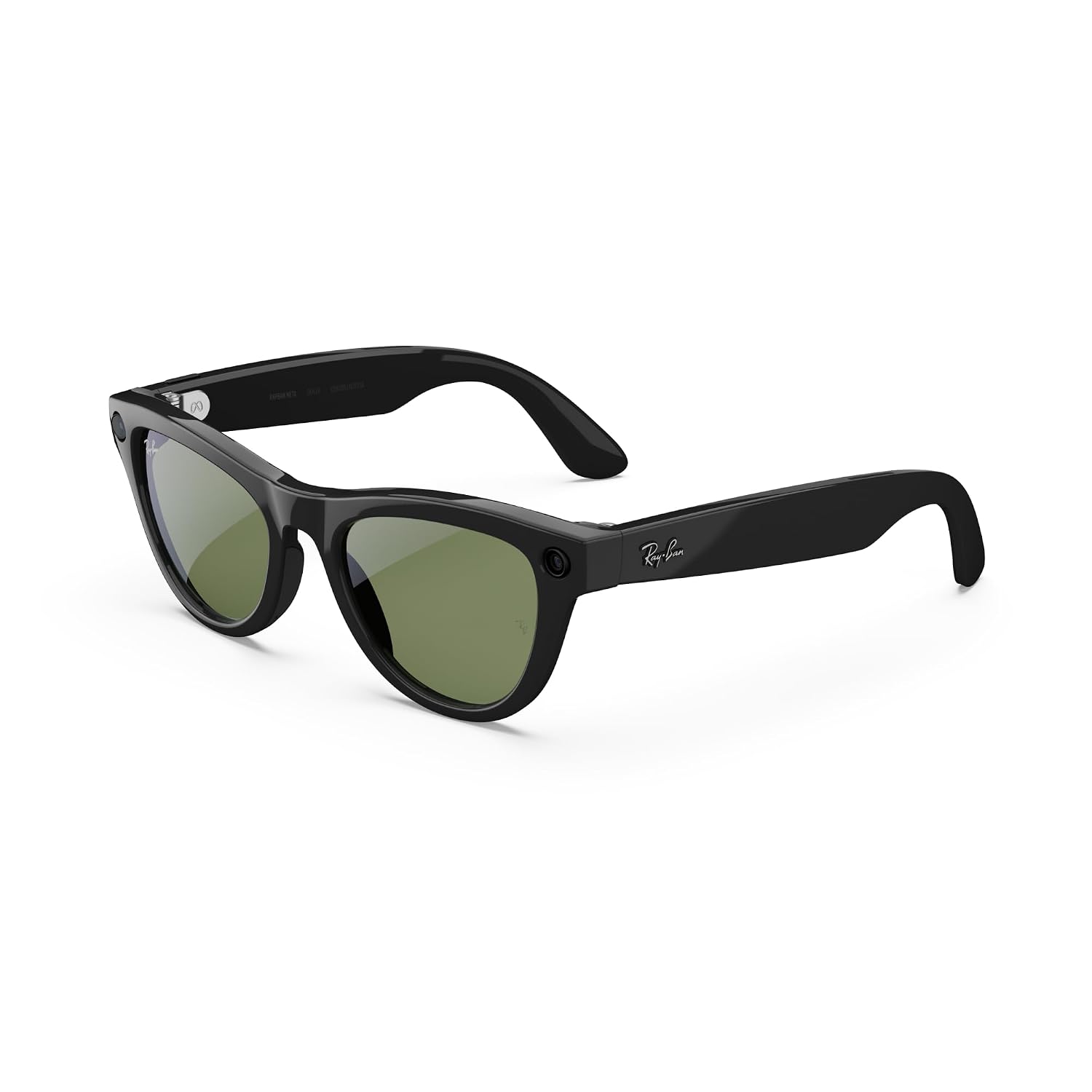
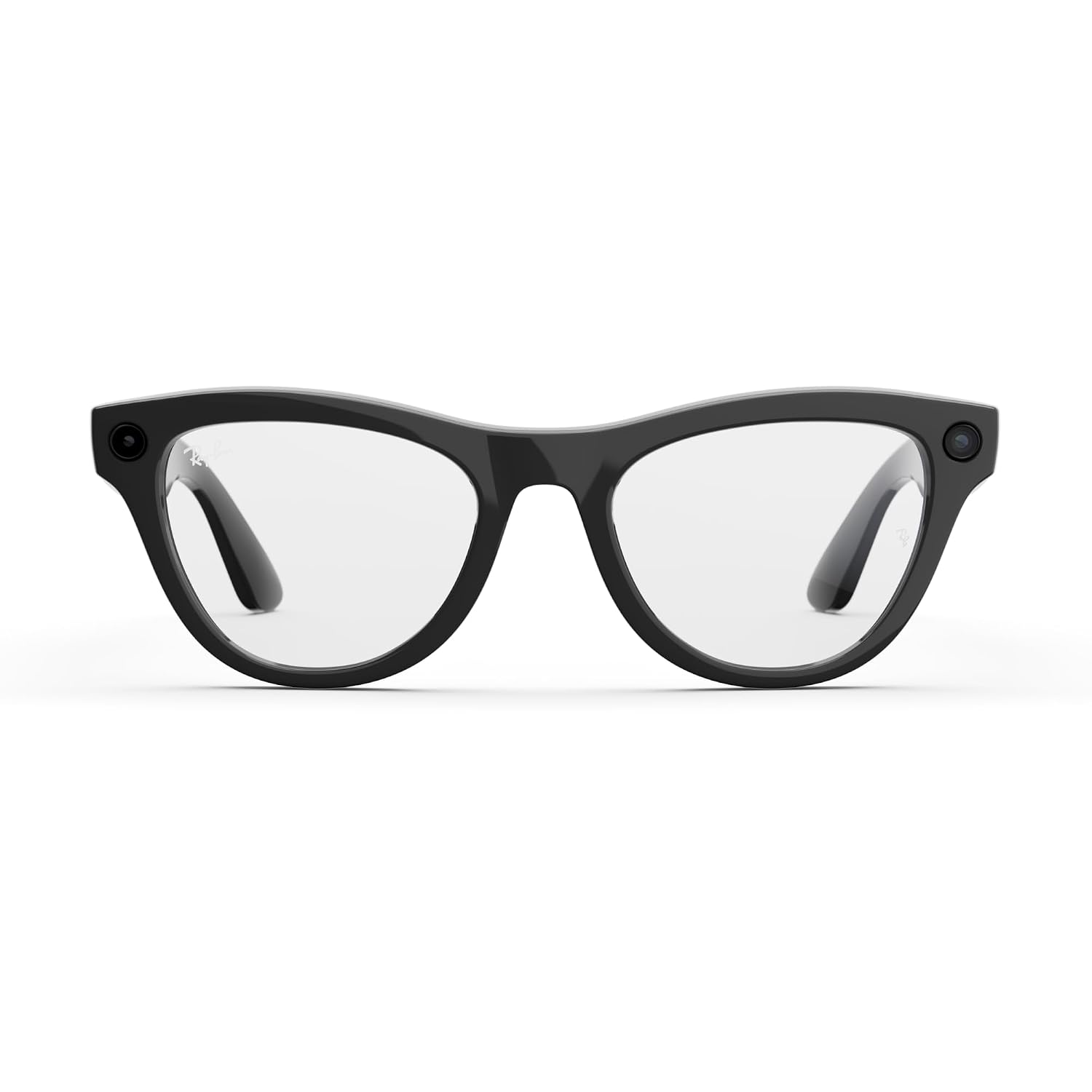
The first time someone asked me what I was wearing, I was standing in a security line at O’Hare, glasses on, recording nothing in particular, just the slow shuffle of roller bags and the overhead hum of fluorescent lights. I told them they were Ray-Ban Meta smart glasses, and they squinted, nodded, and went back to their phone. That’s kind of the whole point. **These look like regular sunglasses.** There’s no ring light, no protruding camera module, no sci-fi bulk pressing against your temples. Just a slim shiny black frame, a clean Skyler silhouette, and a quiet LED near the corner of the right lens that blinks when you’re recording. I wore them for three weeks straight, and nobody thought they were anything other than a decent pair of Ray-Bans.

The First Time I Used It
I’d been loosely following the wave of phone and mobile wearable technology for a while, mostly skeptical, mostly waiting for something that didn’t require charging a separate earbud case and a dedicated app and a firmware update before I could leave the house. Then a colleague walked into a meeting wearing these and streamed a fifteen-second clip to Instagram Live without touching their phone. I stopped mid-sentence. That was enough.
Setup took about four minutes. The Meta View app paired cleanly over Bluetooth, and by the time I had my second cup of coffee, I was already experimenting with the 12 MP ultra-wide camera from the perspective of my own eyes. It felt strange and then immediately useful.
How It Actually Performs
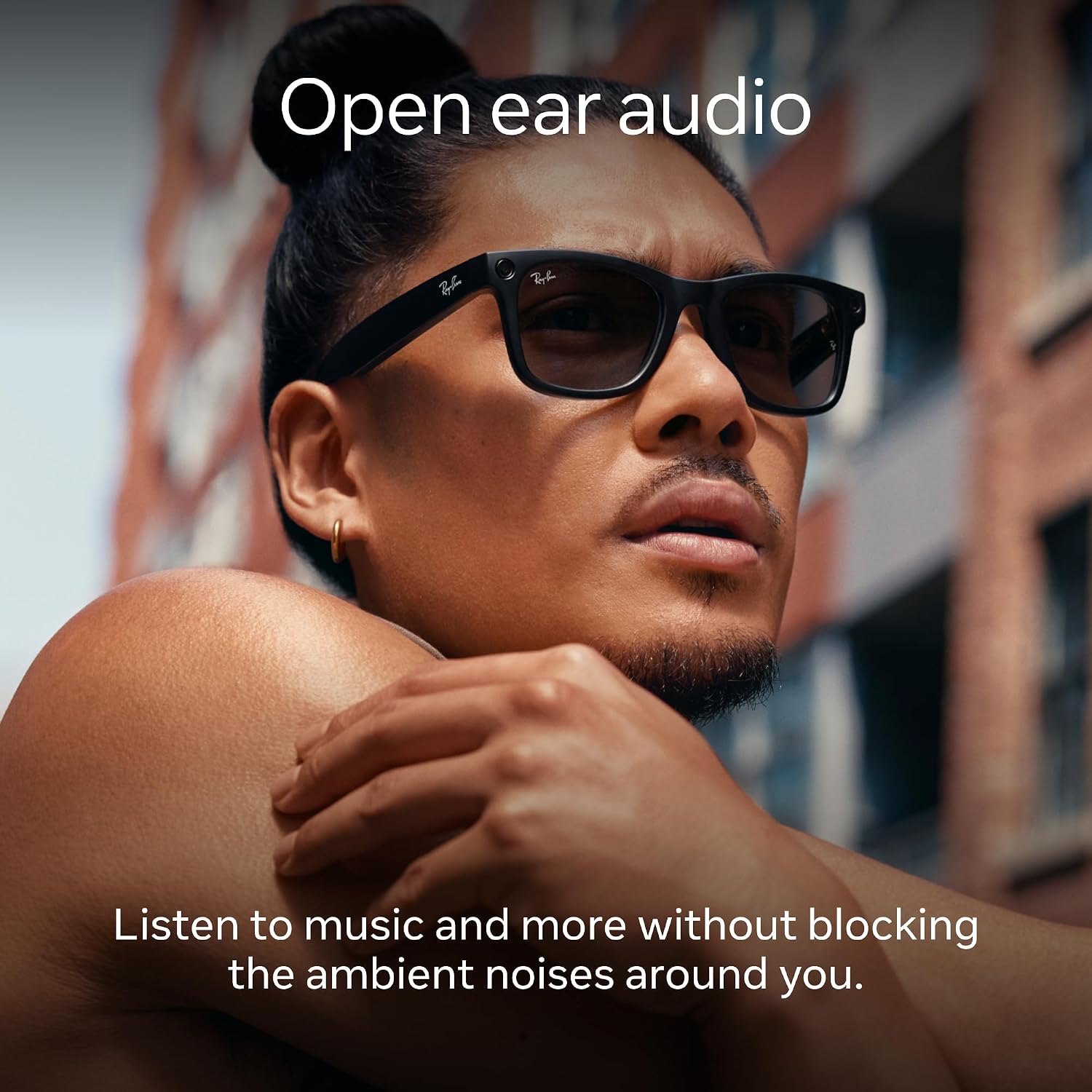
Let’s talk about the camera first because that’s what most people ask about. The **ultra-wide lens captures a surprisingly wide field of view** from a first-person vantage point, and in good light, the footage is genuinely usable. Not mirrorless quality, not even flagship phone quality, but sharp enough to share, textured enough to feel real. In low light, there’s noise. That’s just physics. The frame also packs open-ear speakers that pipe audio directly toward your ears without sealing them off from the world, which means you can take a call on a busy sidewalk without the isolation anxiety of full ANC headphones.
“Wearing these for a week didn’t feel like using a gadget. It felt like having a quieter, more attentive version of your phone.”
Battery life is listed at up to eight hours, and in my experience that held reasonably true under mixed use, some recording, some music, some passive wearing. Heavy recording sessions drained it faster, closer to five or six hours. The charging case topped things back up overnight without fuss. Worth noting: the broader wearable tech conversation has been grappling with how much compute you can pack into a frame this thin, and the Ray-Ban Meta Gen 1 shows both the ceiling and the floor of that compromise in honest ways.


How I Actually Used It
Setup 1: Tuesday Standup, Conference Room B
I wore them during a hybrid standup where half the team was remote. I wasn’t recording, just wearing. The open-ear audio streamed my calendar alerts and a quick Slack ping without me pulling out my phone once. The person next to me didn’t notice anything unusual. Afterward, one of the remote attendees asked if I’d been wearing earbuds because my voice sounded slightly different, which is the best kind of feedback: noticeable only in the most minor way. It made the whole meeting feel lighter somehow, less tethered.
Setup 2: Saturday Farmers Market, Overcast Morning
This is where the camera really earns its keep. I shot about six short clips of vendors, produce arrangements, my dog trying to eat a croissant off the ground, all without raising a phone. The first-person footage has a documentary intimacy that’s hard to replicate with a handheld. You’re not framing a shot. You’re just living, and the recording happens. One clip I uploaded directly from the Meta View app to Instagram without any post-editing. It got more engagement than my usual grid posts. Make of that what you will.

Setup 3: Three-Hour Flight, Window Seat
The travel use case is where the Ray-Ban Meta Skyler really makes sense as a wearable technology investment. I queued up a podcast, listened through the open-ear speakers, watched clouds at 35,000 feet, and didn’t once wrestle with a tangle of wires or a slipping earbud. The glasses stayed comfortable across the full flight. **No pressure points, no heat buildup.** The metal frame conducts cold at first, then settles. By the time we hit cruising altitude I’d forgotten I was wearing anything technical at all.
What Other People Are Saying
With 174 ratings sitting at a 4.5 average, the consensus picture is fairly consistent: people love the form factor, appreciate the camera quality in daylight, and occasionally wish the AI integration went deeper. That tracks with my own experience.
The few lower ratings tend to cluster around one issue: the expectation gap. If you come to this expecting performance benchmarks comparable to dedicated earbuds or a smartphone camera, you’ll be disappointed. If you come expecting a sleek everyday frame that happens to do those things competently, you’ll probably love it as much as I do.
Who Should Skip It
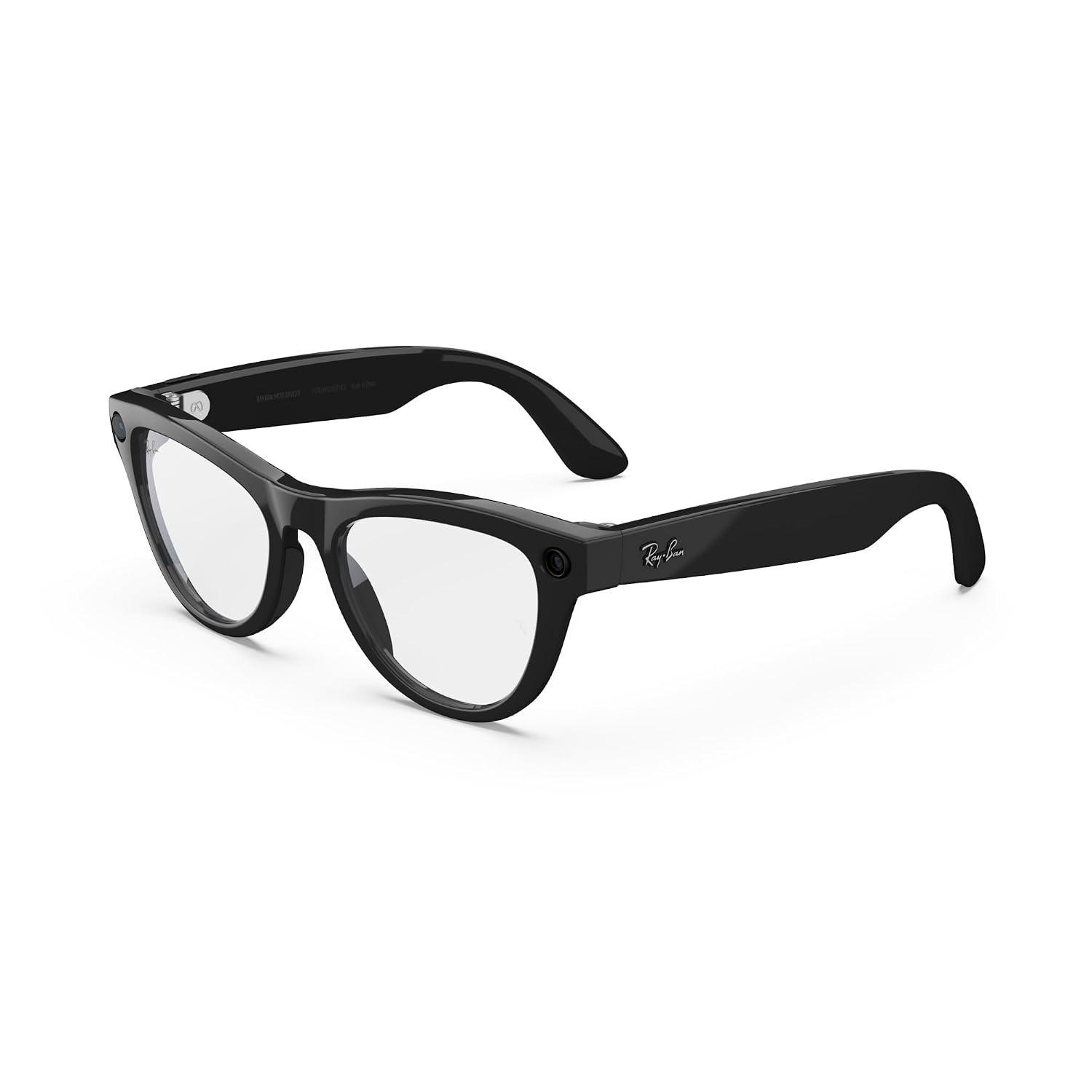
If you need professional-grade audio, these aren’t replacing your studio headphones or your dedicated wireless earbuds with active noise cancellation. The open-ear design is a feature for situational awareness, not for blocking out the world. Similarly, if your primary goal is high-resolution video documentation, a dedicated action camera will outperform the 12 MP wide-angle in any demanding condition. **Anyone who wears prescription lenses** should also check compatibility carefully before committing, since the clear lens version requires a separate prescription insert process. And if you’re deeply in the Apple or Google ecosystem and expect native deep integration out of the box, expect a slight learning curve with the Meta View app.
What It Replaces on My Desk
Before these arrived, I was carrying a phone, a pair of wireless earbuds, and occasionally a small action camera when I knew I wanted to document something. That’s three objects, three charge cycles, three things to forget in an Uber. **The Ray-Ban Meta Skyler consolidated two of those into a single frame** I was already putting on my face every morning. The earbuds went into a drawer. The action camera is still around for serious shoots, but for everyday capture, it hasn’t moved in three weeks. That’s the clearest signal I can give you.
If you’re building out a curated everyday carry tech setup, the gap these fill is real. And if you’re the kind of person who loses earbuds but never forgets their glasses, the math on this becomes obvious fast.
FAQ
What devices are these compatible with?
The Ray-Ban Meta smart glasses connect via Bluetooth and are compatible with both Android and iOS devices. The Meta View app is required for full functionality, including media management and firmware updates.
How long does the battery actually last in real-world use?
Under mixed use (light recording, audio streaming, some passive wearing), expect somewhere between five and eight hours. The charging case provides additional top-up cycles, so a full day is achievable with the case in your bag.
Can I use these for phone calls?
Yes. The open-ear speakers and built-in microphones support hands-free calls over Bluetooth. Call quality is solid in quiet environments, though wind noise can be a factor outdoors at speed.
Does the build quality hold up to the brand’s reputation?
The metal frame and overall finish feel consistent with what Ray-Ban has always done well, which is make something that looks refined and holds up to daily wear. The shiny black Skyler finish shows fingerprints near the hinges but nothing that degrades the feel of the frame. For what you’re paying at this price point, the construction reads above what you’d expect from a first-generation smart wearable.
What’s the warranty situation?
Ray-Ban Meta products typically carry a standard limited manufacturer warranty covering defects in materials and workmanship. It’s worth registering through the Meta View app after purchase to ensure your coverage is documented.
The Verdict
Three weeks from now, when I’m back in another airport security line, I’ll be wearing these. Not because I need to record anything. Not because I’m taking a call. Just because they’re on my face, doing quietly useful things, and **the best wearable technology is the kind you stop noticing you’re wearing.** The Ray-Ban Meta Gen 1 Skyler in shiny black is the most genuinely wearable smart device I’ve tested in this category, which sounds like a low bar until you realize how badly most of this category has failed that test. The camera is good enough. The audio is good enough. The AI features are early but promising. And the frame is, simply, a nice pair of glasses. For anyone building a thoughtful tech gift list or looking for the best wearable smart glasses for everyday travel and mobile use, this is the version I’d point you toward. The value reads above what you’d expect for a first-generation product.
If you want to see how these fit alongside other wireless and Bluetooth accessories we’ve tested, or browse our picks in the broader mobile camera and lens category, those roundups are worth a look. But if you’ve been waiting for smart glasses that don’t make you look like you’re waiting for smart glasses to get good, the wait is over.
Every Angle
The product as photographed for Amazon — hero, angles, ports, detail.

As an Amazon Associate I earn from qualifying purchases.