AI Smart Glasses with 4K Camera: Honest Review

A pair of sunglasses that translates a menu, records your kid’s first steps, and pipes a podcast into your ears — all at the same time — sounds like science fiction until you’re actually wearing them at a street market in Lisbon.
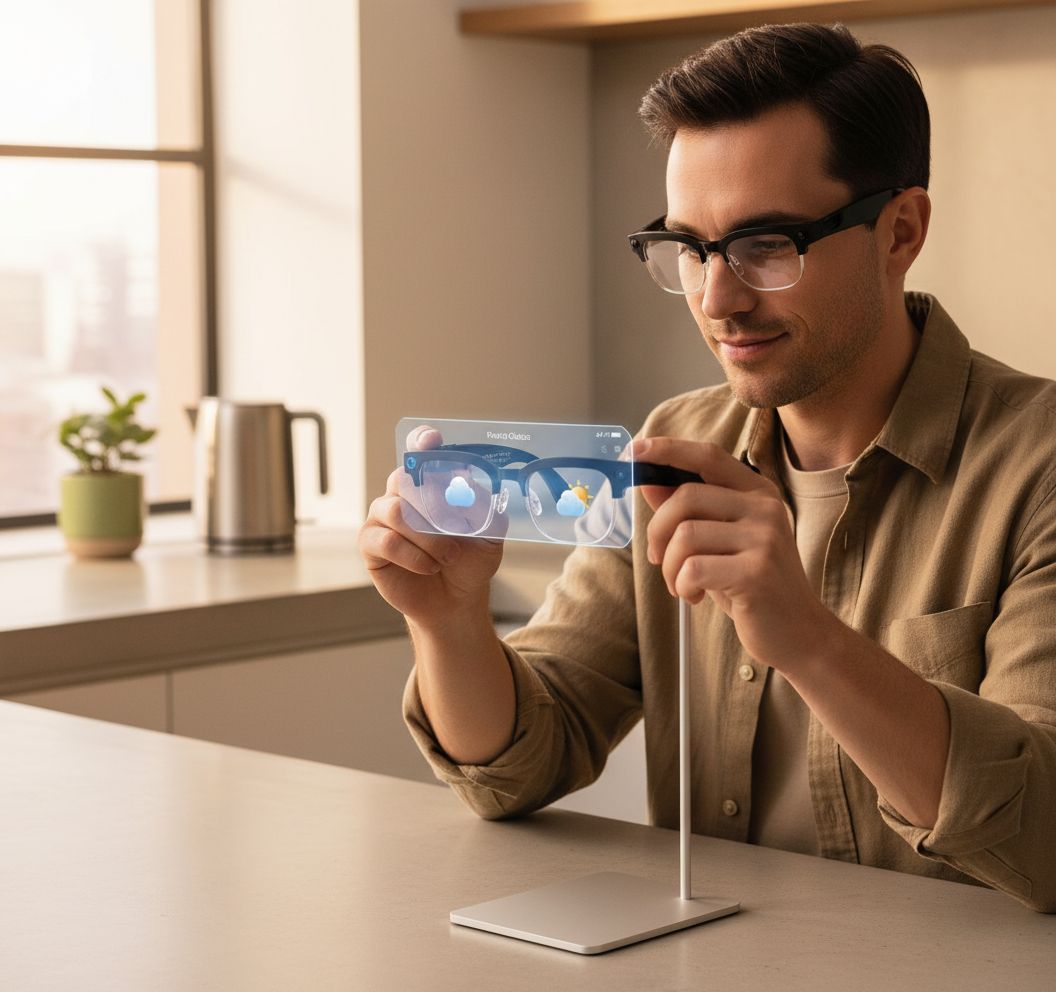
The morning light in the departure terminal was the flat, grey kind that makes everyone look slightly unwell. I had a flight in two hours, a camera bag I didn’t want to dig through, and a conversation happening next to me in a language I didn’t speak. I reached up, tapped the frame of the SGUKZF AI Smart Glasses once, and watched the translation appear in my peripheral vision like a quiet miracle. These are not your uncle’s Bluetooth sunglasses with a single earbud crammed into the arm. They are something more considered, more capable, and more strange than that. I’ve been wearing them for three weeks across airports, coffee shops, and one very confusing farmers market, and I’m still not entirely over the novelty of it.
The First Time I Used It
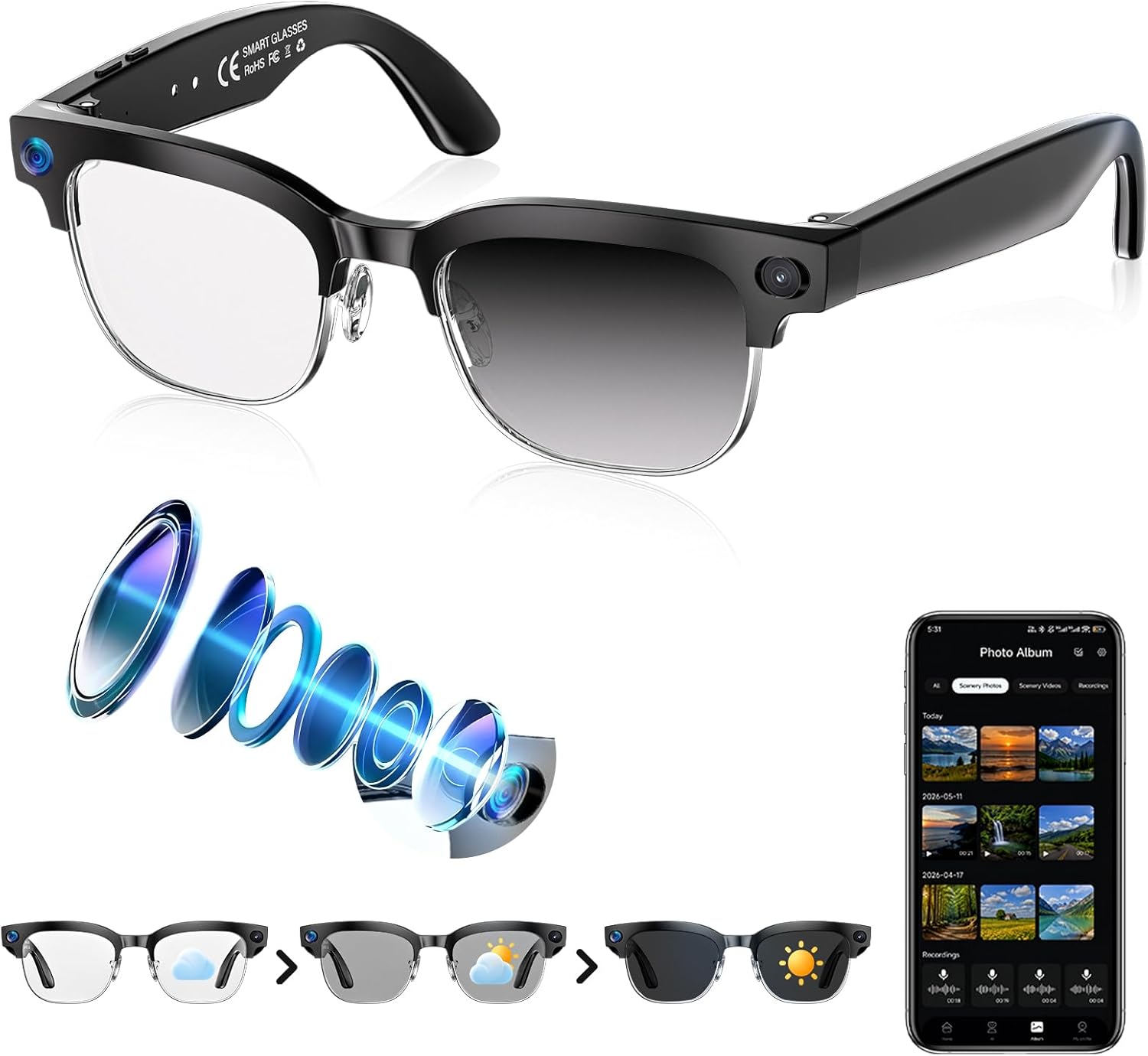
I found the SGUKZF glasses while falling down a rabbit hole of emerging wearable tech coverage late on a Wednesday. Most smart glasses I’d seen were either enormously expensive or embarrassingly clunky, the kind of thing you’d wear as a conversation piece and then retire to a drawer. These stopped my scroll because they looked, genuinely, like sunglasses. Black frames, clean lines, aluminum and polycarbonate build with a photochromic lens that shifts with the light. Nothing screaming “I am a computer strapped to your face.”
I ordered a pair mostly out of skepticism. A wearable tech device at this price point that claims 4K EIS video, real-time translation, open-ear audio, and object recognition felt like a spec sheet written by someone who’d never met a hardware engineer. And yet. Here we are.
How It Actually Performs
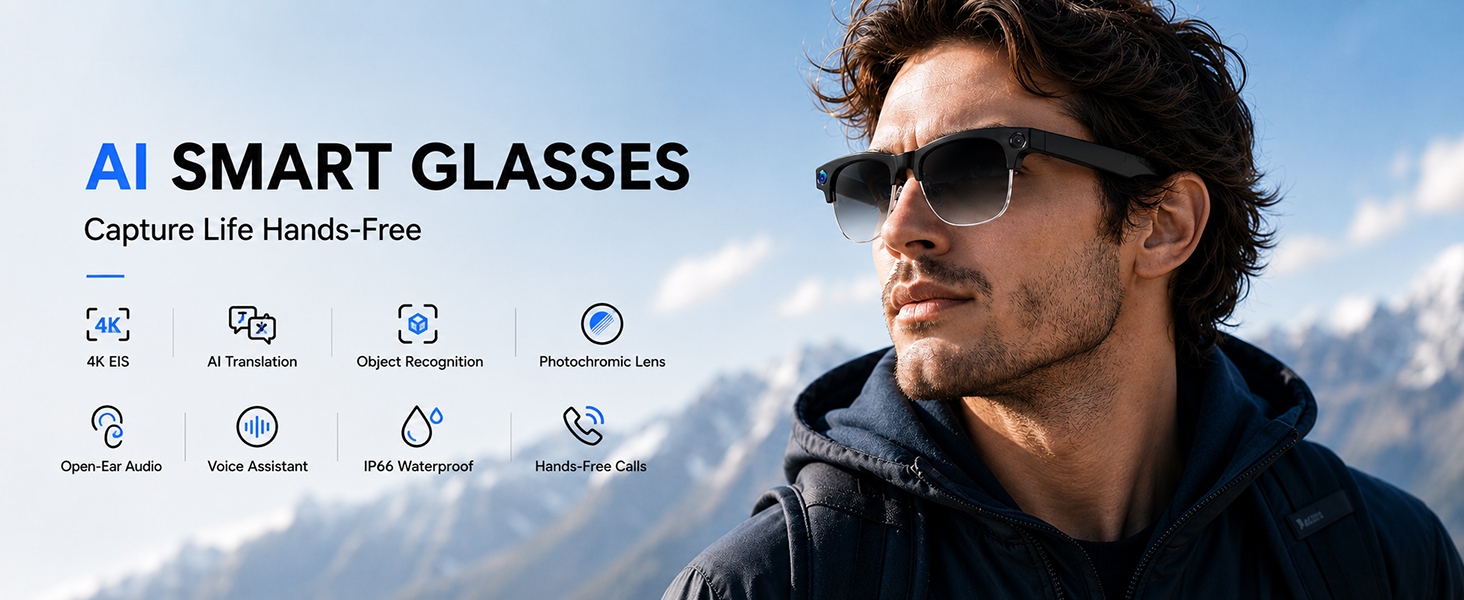
Let’s start with the camera, because that’s where the rubber meets the road on any smart glasses review worth reading. The 4K capture with electronic image stabilization is surprisingly composed. I recorded about forty minutes of walking footage through a crowded market and the result was watchable, steady footage that didn’t have the seasick wobble you’d expect from a frame bouncing on someone’s nose. Colors are reasonably accurate in good light. Low light is murkier, softer, less confident, which is exactly what you’d expect from a lens this small embedded in a frame this slim.
“The real-time translation feature alone could justify owning these for anyone who travels more than twice a year.”
The open-ear audio is better than it has any right to be. It’s not isolation, it’s not noise cancellation, it’s ambient, directional sound that sits just above your ears. In a quiet room, someone nearby can hear what you’re listening to. In a coffee shop, it disappears into the ambient noise. The honest limitation here is volume ceiling, which caps out in a way that makes it less useful on planes or subway platforms. For more on what to expect from open-ear audio wearables, The Verge’s ongoing wearable coverage is a useful benchmark for understanding where this category sits right now.


How I Actually Used It
Setup 1: Tuesday Standup, No Coffee Yet
My first real-world deployment was a remote team standup where I stayed on mute and walked around my apartment. The open-ear Bluetooth audio meant I could hear my colleagues, pour a coffee, check the back garden, and look like a functioning adult, all without headphones tangling around my mug. I paired the glasses to my phone in under a minute. The connection held for the entire call without a dropout. The frame weight is negligible after about thirty seconds, which matters more than people realize for something you’re wearing during a morning routine.
Setup 2: Street Photography, Unannounced
This is where I got genuinely excited. I spent a Saturday afternoon wandering a weekend market with the glasses recording from my eye level rather than from a held phone. The footage had a first-person intimacy that tripod or handheld shooting simply can’t replicate. The EIS anti-shake did its work quietly. Nobody knew I was recording. That raised its own ethical questions I had to sit with, but as a documentary tool for personal travel memory, it was striking in a way I hadn’t anticipated. For anyone interested in the broader landscape of smart wearable cameras and recording devices, the glasses slot into that category more comfortably than they do the “audio wearable” drawer.
Setup 3: Lisbon, Street Menu, Zero Portuguese
The real-time translation feature is the one I keep coming back to. Standing in front of a handwritten chalkboard menu somewhere near Alfama, I activated the object recognition and translation mode and read the specials without opening Google Translate, without holding up my phone, without performing the universal tourist mime of confusion. It worked. Not perfectly, not instantly, but it worked well enough that I ordered correctly and felt slightly smug about it. For frequent travelers, this is the feature that changes the daily texture of being somewhere unfamiliar. The photochromic lenses adjusted to the afternoon sun without me touching anything, which sounds small and isn’t.
What Other People Are Saying
The SGUKZF AI Smart Glasses review pool is still forming, but the early signal from verified buyers is consistent with my own experience. Praise clusters around the camera quality and translation accuracy; criticism lands, predictably, on low-light video and the audio ceiling in loud environments.
What that pattern tells me is that these glasses reward thoughtful deployment. They’re not a blunt instrument. Use them in the right context and they perform above expectation. Push them into their weak zones and you’ll feel the limits. That’s a reasonable trade for what you’re paying in this tier.


Who Should Skip It
If you need serious audio isolation for commuting or gym use, these won’t serve you. The open-ear design is a philosophical choice, not a budget compromise, but it’s a meaningful one if your environment is loud. Power users who record professionally will hit the video limitations within the first hour. And if you’ve never worn glasses regularly, the adjustment period for wearing a frame all day is real, regardless of how light the build is. For wearable audio with deeper isolation, our editor’s top tech picks covers alternatives worth comparing.
Also, if you’re uncomfortable with the social dimensions of a recording wearable, that discomfort is valid and worth thinking through before you buy.
What It Replaces on My Desk
Before these, my travel kit included a compact Bluetooth speaker for audio, a clip-on action camera for hands-free footage, and a dedicated translation app I’d have to stop and open like a person from 2019. The SGUKZF glasses consolidate three items into one frame. That’s not nothing. The clip-on camera is staying in the drawer. The translation app is still on my phone but I open it far less often. I’ve also stopped reaching for my over-ear headphones during morning calls when I’m moving around, which is a small but daily quality-of-life shift that adds up over a week.
For anyone building out a connected smart home and mobile setup, the glasses pair naturally with the broader ecosystem of smart plugs, smart lighting systems, and other ambient computing devices that make your environment a little more responsive without demanding your full attention.

FAQ
What devices do these glasses pair with?
The SGUKZF AI Smart Glasses use standard Bluetooth and are compatible with virtually any modern smartphone, tablet, or laptop. No proprietary app is required for basic audio pairing, though the AI features benefit from a companion app connection.
How long does the battery last during active use?
In mixed use, meaning some recording, some audio, and occasional translation tasks, I averaged around three to four hours before needing a charge. Continuous 4K recording will drain it faster. The magnetic charging cable is proprietary, so keep track of it.
Can I wear these as regular sunglasses?
Yes, and this is genuinely one of the better design decisions. The photochromic lenses adjust to ambient light, which means they’re functional outdoors even when you’re not using any of the smart features. The build is light enough that wearing them passively for an afternoon isn’t uncomfortable.
Does the build quality match what you’d expect from a wearable at this price point?
The aluminum and polycarbonate construction feels more considered than comparable wearables in this tier. The hinges are solid, the finish doesn’t show smudges aggressively, and nothing about the frame feels provisional or cheap. The value reads notably above what you’d expect given the build quality.
What’s the return and warranty situation?
You’ll want to verify current policy with the seller directly, as it can vary by platform. Generally, SGUKZF products sold through major retail platforms fall under standard return windows. Keep your original packaging if you think there’s any chance you’ll want to return or exchange.


The Verdict
Three weeks in, I still reach for the SGUKZF AI Smart Glasses when I’m heading somewhere interesting. That’s the tell. I’ve reviewed gadgets that impressed me on a spec sheet and spent the rest of their lives in a charging case. These have become part of how I move through the world on travel days and busy mornings. The camera quality is genuinely good in the right light. The translation feature is practically useful in ways that feel new. The audio is a comfortable companion for calls and podcasts, even if it won’t replace dedicated headphones for focused listening sessions. It is a flawed device, as all wearables at this stage of the category are. The low-light video softens. The audio doesn’t isolate. The battery won’t outlast a transatlantic flight. But as a smart wearable travel gadget that does five things with competence and two of them with something close to excellence, the SGUKZF glasses occupy a space in my bag that nothing else in this tier comes close to filling.
For further reading on smart wearable reviews and testing methodology or to see how this category is evolving at the high end, Engadget’s hands-on reviews and RTINGS’s performance benchmarks are worth bookmarking. And if you’re shopping for tech gift ideas for a traveler in your life, these are the kind of thing that earns a genuine reaction on the unwrapping end.
Verdict: The best AI smart glasses for everyday travel use you can find at this price tier, for anyone willing to work within their honest limitations.
Every Angle
The product as photographed for Amazon — hero, angles, ports, detail.



As an Amazon Associate I earn from qualifying purchases.